Research
In 2017, Mozambique used WhatsApp (WA) as a tool to mentor provincial and district health teams during a bed nets universal coverage campaign (UCC). A…
Health
World Vision partners with communities to stop preventable diseases before they take hold. Through stronger health systems and integrated approaches to WASH, nutrition, and child health, we help ensure that children are protected from infection and able to grow up healthy and strong.
According to the World Health Organization, the leading causes of death among children under five globally include infectious diseases — such as acute respiratory infections, diarrhea, and malaria. In response, World Vision promotes an integrated approach to maternal, newborn, and child health (MNCH), nutrition, healthy behavior change, and WASH. Alongside disease-specific interventions like immunization and vector control, this holistic strategy helps children begin life with a strong foundation and thrive in healthy environments.
We work in partnership with national and sub-national health systems, engaging across populations and geographies to empower communities to identify their own health needs, develop local solutions, and set their own goals. We equip them with the knowledge and resources to sustain and build on the progress they achieve.
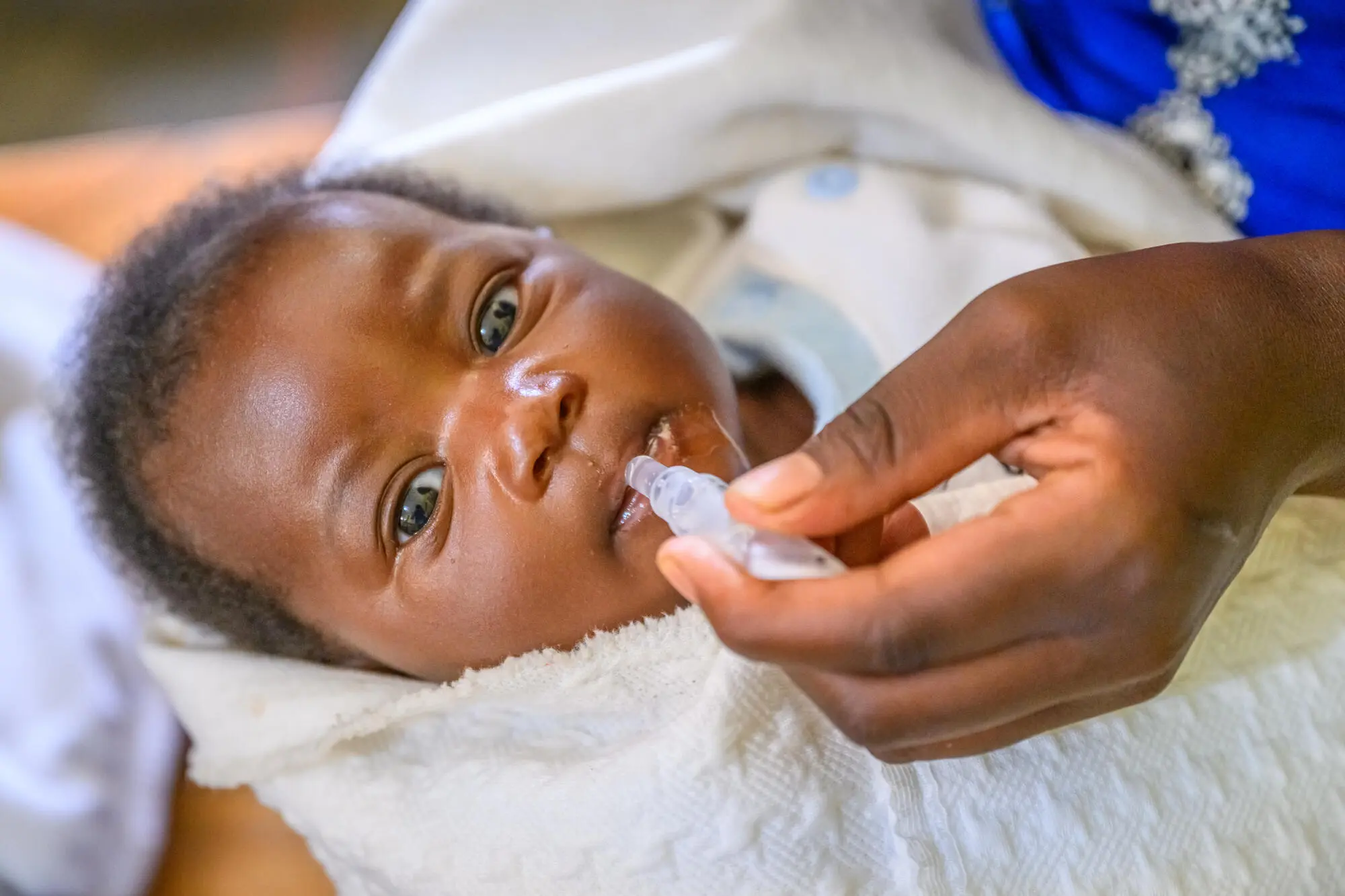
According to the 2024 WHO Malaria Report, there were an estimated 263 million cases of malaria worldwide in 2023, with an incidence of 60.4 cases per 1,000 population at risk. This represents an increase of 11 million cases from the previous year and a rise in incidence from 58.6 cases per 1,000 in 2022.
The WHO African Region continues to bear the heaviest burden, accounting for an estimated 94% of global malaria cases in 2023. The WHO Eastern Mediterranean Region also saw a significant increase, with a 57% rise in incidence since 2021, reaching 17.9 cases per 1,000 population at risk in 2023.
The five countries carrying the heaviest estimated malaria burden in 2023 were Nigeria (26%), the Democratic Republic of the Congo (13%), Uganda (5%), Ethiopia (4%) and Mozambique (4%). Globally, malaria caused an estimated 597,000 deaths in 2023, with a mortality rate of 13.7 per 100,000 population. This reflects a decline from 622,000 deaths and a mortality rate of 14.9 per 100,000 in 2020. The WHO African Region accounted for 95% of all estimated malaria deaths worldwide.
World Vision began implementing malaria programming through the Global Fund over a decade ago. We support national governments in implementing their malaria programs and strengthening health systems in several countries, including Angola, Haiti, Central African Republic, Malawi, Mozambique and Sierra Leone.
Our successful and scalable malaria programs include:
In Mozambique, the Global Fund Malaria Program (2019–2023) documented significant progress in malaria control:
In addition to our Global Fund programming, we also partnered with The Rotary Foundation, Gates Foundation, and private donors to implement the Partners for a Malaria Free Zambia (PMFZ) program (April 2021–November 2024).
PMFZ helped to reduce malaria transmission and mortality in ten high-burden malaria districts across Zambia’s Central and Muchinga provinces by using simple, sustainable, and evidence-based approaches for malaria control and treatment— designed for national replication and scale-up.
Key results of the program include:
In 2023, tuberculosis (TB) returned to being the world’s leading infectious disease killer, surpassing COVID-19. It was also the leading cause of death among people with HIV and a major contributor to deaths related to antimicrobial resistance.
Globally, an estimated 10.8 million people fell ill with TB in 2023 — up from 10.7 million in 2022, 10.4 million in 2021, and 10.1 million in 2020. Of those affected, 55% were men, 33% were women, and 12% were children and young adolescents.
World Vision is committed to identifying and treating TB in the communities where we work, with the goal of eliminating the disease. Our approach includes introducing innovative TB prevention strategies and conducting community-based screening — sometimes using mobile X-rays in hard-to-reach areas — to detect and treat cases early, especially among children and other vulnerable groups. Our projects support national governments through health and community systems strengthening, while employing advocacy and social mobilization strategies to improve case identification, diagnosis, and enrollment in directly observed treatment short-course (DOTS) programs. World Vision also supports diagnosis and treatment of multidrug-resistant TB and HIV-TB co-infection.
As a long-term partner in national TB responses across many countries, World Vision empowers communities through leadership development, technical and vocational training, advocacy with local leaders, mobilization of community volunteers, and linkages to local health providers. We also provide direct support to TB patients and their families. In addition, we partner with a number of local nongovernmental and faith-based organizations to strengthen their capacity to respond to the TB epidemic and to establish strong community and facility linkages.
Since 2003, World Vision has implemented Global Fund grants totaling $420 million across 13 countries. In 2023, our TB programs operated in Somalia, Papua New Guinea, Malawi, Haiti, and Nicaragua as Principal Recipients, and in Senegal, Thailand, India, Myanmar, and Kenya and Sub-Recipients. These programs focused on scaling up TB prevention and treatment, improving quality of care, and addressing access barriers for vulnerable and high-burden populations. Integrated TB/HIV activities included regular screening of people living with HIV (PLHIV) for TB, HIV testing for individuals with TB symptoms, and provision of antiretroviral therapy (ART) alongside TB treatment for co-infected individuals.
Neglected tropical diseases (NTDs) are a group of 21 mainly infectious diseases that affect more than 1 billion people across 149 countries—approximately one in five people worldwide. These diseases, which are typically bacterial, parasitic or viral infections, disproportionately impact poor and marginalized communities lacking adequate sanitation and health infrastructure. Children and women are particularly vulnerable, as NTDs can cause lifelong disfiguration and stigma, negatively impact children’s health and education, and hinder overall economic development.
With more than 25 years of global experience, World Vision partners with governments to deliver preventive and curative treatment through mass distribution of medication, health and sanitation supplies, and food products. We have a long-standing history of providing clean water and sanitation access for millions of children and their families — critical elements in the prevention and elimination of NTDs.
Our technical strategies use a health systems strengthening approach aligned with the World Health Organization’s Neglected Tropical Diseases Roadmap 2021–2030. This roadmap aims to address the NTD burden by promoting holistic, cross-sectoral approaches and calling for greater ownership of NTD programming by countries and communities.
World Vision’s approach focuses on:
Examples of our work include:
World Vision was a technical partner on the Act to End Neglected Tropical Diseases (NTDs) | West program. Through this partnership, we worked with national NTD programs and Ministries of Health to strengthen cross-sector collaboration and integrate NTD efforts with WASH, education, malaria, nutrition, and other health programs and sectors.
COVID-19 has had far-reaching effects on children and families across the globe, disproportionally impacting the world’s most vulnerable — especially those living in fragile contexts — and exacerbating already dire conditions. According to the World Bank, while global poverty has declined significantly since 1990, progress slowed before the pandemic and was further set back by COVID-19 and other crises — resulting in millions more people living in extreme poverty than expected, especially in low-income and fragile countries. This has had a devastating impact on families struggling to keep their children safe and in school, ensure proper nutrition, and access essential healthcare.
The pandemic overwhelmed already strained health systems, particularly in areas with limited access to essential services. It exposed and deepened existing challenges in delivering healthcare services, including gaps in hiring, deploying, retaining, and protecting health workers. Disruptions to supply chains, lockdowns, limited mobility, and fear of infection also reduced access to lifesaving treatment and preventive care for other illnesses. For the first time in 10 years, immunization coverage dropped, leading to an increase in deaths from tuberculosis and malaria.
The full impact of COVID-19 on health systems, economies, and societies is still unfolding. Strengthening health systems to be resilient in times of crisis is crucial to ensuring children and adolescents are not dying from treatable and preventable conditions. Investing in sustainable, community-centered healthcare systems now will help mitigate future shocks and protect the well-being of the most vulnerable.
World Vision responded to the devastating impact of COVID-19 in more than 70 countries. We strengthened health systems by training frontline health workers and providing personal protective equipment (PPE). To address vaccine hesitancy, we engaged community and faith leaders in dialogue and supported community health workers in vaccine administration.
The indirect impacts of COVID-19 will continue to affect vulnerable children and families for years to come.
To reduce this impact, we continue to:
To better understand community needs, World Vision conducted multiple research studies, surveys, assessments, and desk reviews. One example is the report Calling the Shots: Empowering Communities During COVID-19 (March 2022), which reflects on our global COVID-19 response and explores how the pandemic’s indirect impacts will continue to affect vulnerable children and families in the years ahead.
In 2017, Mozambique used WhatsApp (WA) as a tool to mentor provincial and district health teams during a bed nets universal coverage campaign (UCC). A…
This study evaluates a pilot program in Mozambique where a new model for delivering long-lasting insecticidal nets (LLINs) was tested in two rural districts, w…
In 2016/2017, Mozambique launched its first countrywide universal coverage campaign (UCC) for long-lasting insecticidal nets (LLINs) to combat malaria. The cam…
