
Inclusive Food Systems
World Vision works to improve nutrition and economic well-being for the most vulnerable by strengthening inclusive food systems, expanding market access, and building community resilience in the face of ongoing shocks.
Stronger systems, thriving communities
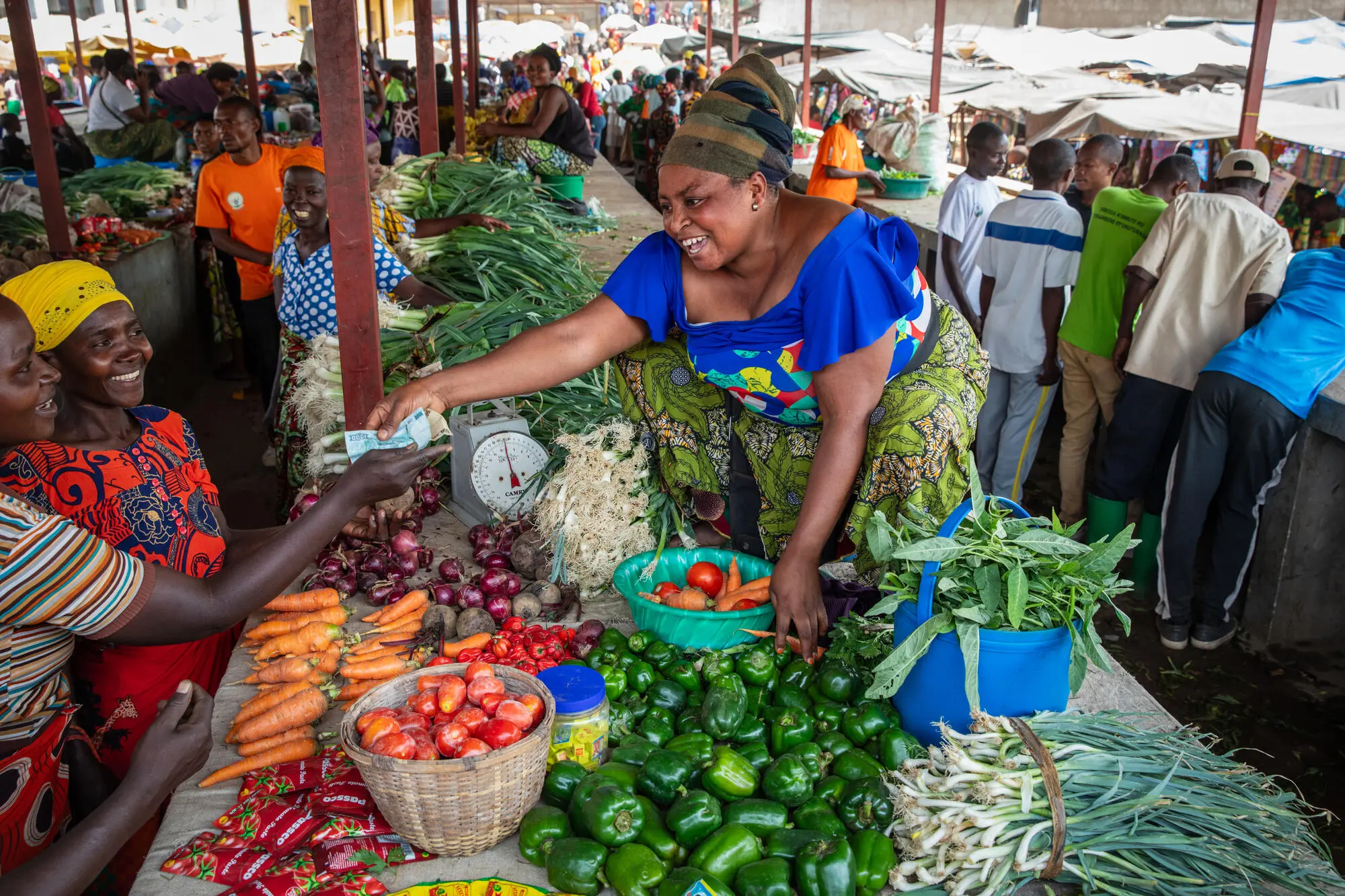
World Vision strengthens nutrition and economic outcomes for the most vulnerable. By working across food supply chains and engaging consumer behavior within local food systems, we strengthen inclusive markets that help integrate poor producers and marginalized communities into local and regional economies — all with the goal of building resilience. We connect farmer groups with input suppliers and buyers through inclusive market systems development, digital savings for economic inclusion, and poverty graduation models.
Our evidence shows that these approaches expand market access, increase profitability in rural value chains, and uplift vulnerable households. Yet, weather-related shocks, economic instability, and conflict continue to threaten hard-won progress. To sustain and scale impact, we are committed to advancing household nutrition, empowering women economically, and strengthening resilient market systems.
Inclusive Food Systems FAQs
What are some examples of World Vision’s work in this area?
Bangladesh: Nobo Jatra
World Vision’s Nobo Jatra Resilience Food Security Activity project, funded by the U.S. government and implemented in southwest Bangladesh with Winrock International and World Food Programme, worked with more than 60,000 smallholder farmers to strengthen the agri-business sector and improve household incomes. Using the Integrating Extremely Poor Producers into Markets field guide, Nobo Jatra facilitated partnerships among key national-level vegetable seed suppliers and agrodealers, retailers, and mobile seed agents. We worked with suppliers to address the limited access and use of inputs at the community level by holding farmer clinics within community markets, fostering farming as a business for smallholder farmers, and enabling market access through connections with national-level vegetable aggregators. Through these efforts, farmer incomes grew by 45%. Farmers now have the ability to diversify their livelihoods by including commercial fruit farming and high-value commercial crops such as watermelons and sunflowers.
Ethiopia: SPIR
The Strengthening PSNP Institutions and Resilience (SPIR) program represents a decade of investment in food security, nutrition, and resilience in Ethiopia. Implemented from 2016 to 2026 through two successive phases, SPIR I and SPIR II, the program partnered with the Government of Ethiopia’s Productive Safety Net Programme (PSNP) to help vulnerable rural households move beyond chronic food insecurity and build sustainable pathways out of poverty. Led by World Vision in partnership with CARE, ORDA Ethiopia, and the International Food Policy Research Institute (IFPRI), the program operated across Ethiopia’s Amhara, Oromia, Tigray, and Southern Nations regions.
At its core, SPIR advanced a food systems approach that addresses the root causes of hunger and poverty rather than their symptoms. Recognizing that what families eat depends on how food is produced, accessed, and valued, the program connected smallholder agriculture, natural resource management, financial inclusion, markets, and behavior change into an integrated model. Smallholder farmers received support to improve crop and livestock productivity, adopt climate-smart practices, restore degraded land, and link to input suppliers and buyers, while households gained access to savings groups, home food production, and nutrition-sensitive agriculture that expanded the availability of diverse, nutritious foods.
Across both phases, SPIR strengthened every stage of the local food system. Farmers were organized into Producer Marketing Groups and linked to agrodealers, veterinary services, and Extended Market Agents to improve productivity and market access. Village Economic and Social Associations (VESAs) provided savings, credit, and a platform for sharing agricultural and nutrition knowledge, while Farmer-Managed Natural Regeneration (FMNR) and watershed restoration rebuilt the natural resource base that underpins food production. These production and market gains were paired with nutrition-sensitive interventions — including home gardening, poultry and small livestock value chains, mixed-flour production, and Community-Based Participatory Nutrition Promotion — that translated increased food availability into healthier, more diverse diets.
Results demonstrate the strength of connecting production, markets, natural resources, and nutrition within a single system. Under SPIR II, more than 58,000 program participants were trained on poultry, shoat, and oxen fattening and other value chains; 254 Producer Marketing Groups were strengthened through governance and market-linkage support; and 4,397 households were connected to agricultural input suppliers and veterinary services. On the environmental side, 3,935 hectares of communal land were rehabilitated through FMNR, millions of tree seedlings were produced, and tree survival rates reached 87% in Oromia and 85% in Amhara — restoring the ecosystem services that sustain productive farming. These system-level gains supported measurable nutrition outcomes, including more than 32,000 children under five screened for malnutrition and over 61,000 caregivers reached through community-based nutrition activities.
The SPIR learning agenda also generated important evidence for the global food security and food systems sector. Research conducted with IFPRI found that layering nutrition-sensitive support and targeted maternal cash transfers onto a livelihoods-based graduation model improved household food security, diets, and resilience to shocks such as drought. Lessons from SPIR have informed Ethiopia’s Productive Safety Net Programme and future livelihoods programming, while the program’s Village Economic and Social Association (VESA) model has been recognized as a promising approach for strengthening household resilience and economic inclusion.
Cambodia: CAST
The Commercialization of Aquaculture for Sustainable Trade (CAST) project (2019–2025), funded by the U.S. Department of Agriculture’s Food for Progress program in partnership with the American Soybean Association and other consortium members, built a resilient and market-driven locally farmed aquaculture system in Cambodia. CAST supported the Royal Government of Cambodia in establishing food safety standards laying the foundation for premium prices in upscale local markets, and increased commercialization revenue and trade of locally farmed fish.
World Vision played a key role in market systems development by strengthening value chain linkages — connecting hatcheries, fish producers, and buyers/distributors — while advancing agrifinance and food safety standards. As a result, Cambodian producers gained greater access to, and confidence in, capital for production assets and business expansion, while also producing high-quality locally farmed fish handled in line with improved food safety practices.
How are we engaging in the broader dialogue on agrifood systems and resilience?
Explore stories, insights, and lessons from our staff and partners working to strengthen inclusive agrifood systems around the world.
- Community Actions, Levers of Change: Reorienting More Inclusive and Resilient Local Food Systems
- Role of Inclusive Market Systems Development in Promoting Resilience: Evidence from World Vision Projects
- The Importance of Food Safety for Sustaining Inclusive, Nutritious Food and Market Systems
- Leading barriers to climate-smart agriculture uptake in Kenya
Inclusive Food Systems Research & Resources
Research
Bangladesh has seen its poverty rate, the proportion of people living on less than USD 1.90 a day, reduce drastically, from 34.2% in 2000 to…
FSL
Tools & Resources
This toolkit provides practical guidelines for World Vision programs on how to apply a more systemic lens to their livelihood, economic, and private sector dev…
FSL
Food Systems Series
Maximizing nutrition outcomes within food systems
Explore tools, insights, and actions for nutrition-focused food systems.
The Mainstreaming Nutrition within Food Systems series brings together literature reviews, guidance notes, blogs, training materials, and more — developed through in-country consultations in partnership with FAO and Action Against Hunger. Designed for policymakers, implementers, and practitioners, these resources offer practical entry points to integrate nutrition into food systems in inclusive, sustainable ways.
Inclusive Food Systems News & Insights
Blog03/06/2026
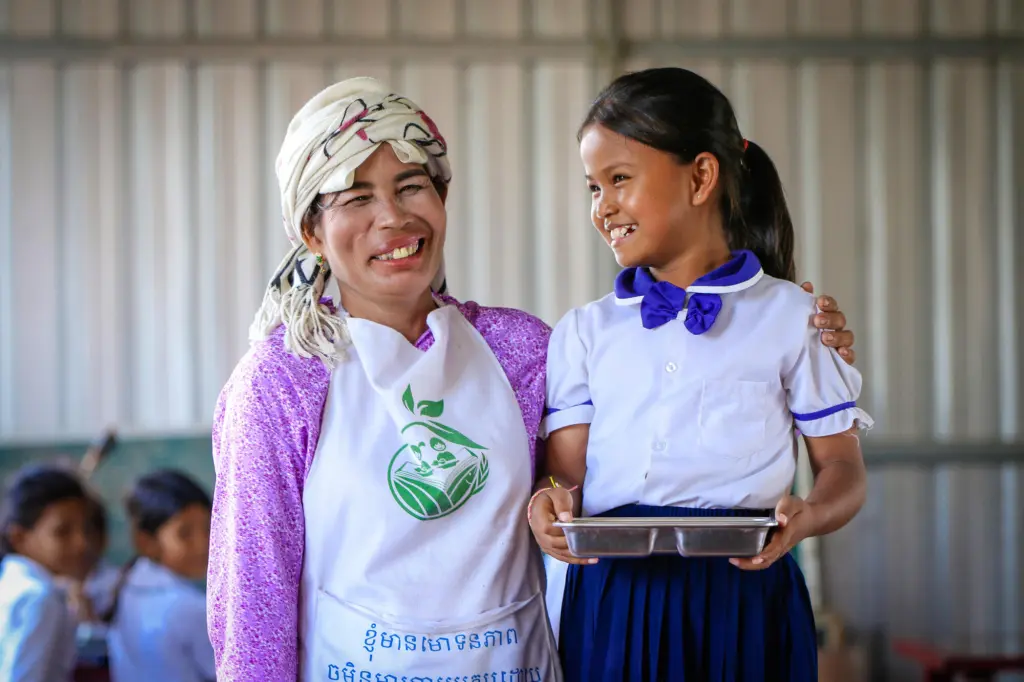
Continuing our School Meals Day series, this blog expands the lens beyond the classroom to examine how school meals function as a community platform connecting…
FSL
Health

Blog10/16/2025
Each year, World Food Day reminds us that food is more than sustenance — it’s the foundation for life, dignity, and hope. This year’s theme,…
FSL
