Projects & Implementation, Reports
This learning brief explores the Community-Based Participatory Nutrition Promotion (CPNP) approach implemented through the SPIR II project in Ethiopia. CPNP is…
FSL
Health

Amid mounting global challenges, World Vision is helping families build resilience and secure lasting access to nutritious food — so that children can grow, thrive, and reach their full potential.
Food security is achieved when people have sustained access to sufficient food, allowing them to meet their dietary and income needs and lead productive and healthy lives. Intersecting shocks from conflict, economic volatility, public health emergencies, and extreme weather events severely undermine food security.
Change in food availability — caused by price hikes, food shortages, and crop failures — can tip large parts of a population into food insecurity, resulting in decreased well-being throughout communities. Nearly half of all deaths among children under five are directly or indirectly linked to under-nutrition, which is closely tied to food insecurity. Poor households typically spend about two-thirds of their income on food, making them especially vulnerable to rising prices. While global food supplies will need to support an additional 3 billion people by 2050, meeting these needs will depend more on efficient and equitable food systems than on simply increasing food production.
Global evidence shows that integrated, multisectoral approaches contribute to improved nutrition outcomes among children and families. In our work to improve food security and nutrition in communities around the world, we leverage our project models and approaches across inclusive food and market systems development, women’s economic empowerment, natural resource management, behavior change communication, and water, sanitation, and hygiene (WASH).

World Vision applies research, adaptive decision-making, and continuous quality improvement to maximize program impact in dynamic contexts. Our research agenda, along with project-specific learning agendas, guides the use of monitoring data to identify effective intervention combinations and the most impactful entry points within food and market systems. For example, a study with ODI explored pathways out of poverty in coastal Bangladesh, while a flagship trial in Ethiopia — detailed below — tested how combining livelihoods support, cash transfers, and behavior change communication could improve nutrition outcomes.
We partnered with the International Food Policy Research Institute (IFPRI) on the Strengthen PSNP5 Institutions and Resilience (SPIR II) Resilience Food Security Activity (RFSA). Building on SPIR I, the program strengthened Ethiopia’s food security safety net while testing approaches to improve nutrition, livelihoods, and resilience. Through rapid studies, impact evaluations, and Ethiopian-led research, the SPIR II learning agenda generated evidence that linked food security and nutrition outcomes while building local capacity for long-term solutions.
Mozambique: Educating Children Together
From 2013 to 2025, World Vision partnered with the USDA McGovern-Dole International Food for Education and Child Nutrition Program to improve education, nutrition, and food security in Mozambique’s Nampula Province. Through the Educating Children Together project, more than 58 million school meals were served to 95,793 students and 1,400 teachers, helping reduce hunger and support learning. The project also reached 138,579 people with nutrition support, including 45,072 pregnant and lactating women and young children. Beyond school feeding and nutrition, the project invested in lasting community assets — constructing or rehabilitating 30 classrooms, 30 latrines, and 10 water points, supporting 90 farmer groups, and training 1,729 community health volunteers in health, hygiene, and nutrition practices. The project also provided deworming medication to nearly 95,000 children and strengthened local education systems through capacity building and social accountability initiatives.
Mozambique: Partnering for Sustainable Education Outcomes (PARES)
From 2024 to 2028, World Vision, in partnership with the USDA McGovern-Dole International Food for Education and Child Nutrition Program, is implementing the Partnering for Sustainable Education Outcomes (PARES) project in Nampula and Zambézia provinces. The project aims to improve literacy outcomes for primary school children through an integrated approach combining school feeding, literacy promotion, health and nutrition education, and water, sanitation, and hygiene interventions. Implemented across 157 schools, PARES is expected to reach 82,844 participants, including 81,984 school children. In addition to supporting learning and nutrition, the project is strengthening school infrastructure, expanding access to safe water and sanitation, promoting healthy behaviors, and supporting food security and livelihoods activities to create lasting benefits for children, schools, and communities.
Angola: Angola Nutrition for Growth, Education and Learning (ANGEL)
From 2024 to 2029, World Vision, in partnership with the USDA McGovern-Dole International Food for Education and Child Nutrition Program, is implementing the ANGEL project in the provinces of Benguela, Cunene, and Huíla. The project works to improve literacy and nutrition among primary school children through a sustainable, multisectoral approach — including school feeding, literacy promotion, health and nutrition education, and improved access to safe water, sanitation, and hygiene services. Implemented across 82 schools, ANGEL is expected to reach 80,360 participants, including approximately 62,000 students and 16,000 pregnant and lactating women receiving take-home rations. Through its local and regional procurement component, the project also strengthens local food systems by partnering with smallholder farmers, cooperatives, and producer associations to supply nutritious food to schools while supporting local livelihoods and economic growth.
Democratic Republic of the Congo: Graduating to Sustainable Agriculture, Income, Nutrition, and Food Security (GAINS)
The GAINS program is a resilience and food security initiative in the Democratic Republic of the Congo’s Kasaï Province, implemented through a consortium led by Mercy Corps. As the geographic lead in the Nyanga and Kitangwa health zones, World Vision works across 17 health areas to strengthen livelihoods, improve nutrition, and build household resilience. Through savings groups, farmer field schools, agricultural support, and road rehabilitation, the project has helped communities increase food production, diversify incomes, and improve access to markets. To date, 58 savings and lending groups have supported 1,453 members with more than $23,800 in savings; 204 farmer field schools have reached 5,100 households; 30 metric tons of improved seeds and tools have been distributed; 44 kilometers of feeder roads have been rehabilitated; and 508 hectares have been placed under improved agricultural management. Community-based nutrition and health interventions have also trained 861 Leader Mothers, supported 60 Care Groups, established 58 safe spaces for adolescents, and facilitated the construction of 3,771 household latrines — helping families improve food security, nutrition, and long-term resilience.

This learning brief explores the Community-Based Participatory Nutrition Promotion (CPNP) approach implemented through the SPIR II project in Ethiopia. CPNP is…
A World Vision-led pilot study in Ethiopia found that training parents and caregivers to detect child malnutrition using MUAC (Mid-Upper Arm Circumference) tap…
The influx of Rohingya refugees into Bangladesh has intensified food insecurity among nearby host communities. This study analyzed data from World Vision’s Eme…
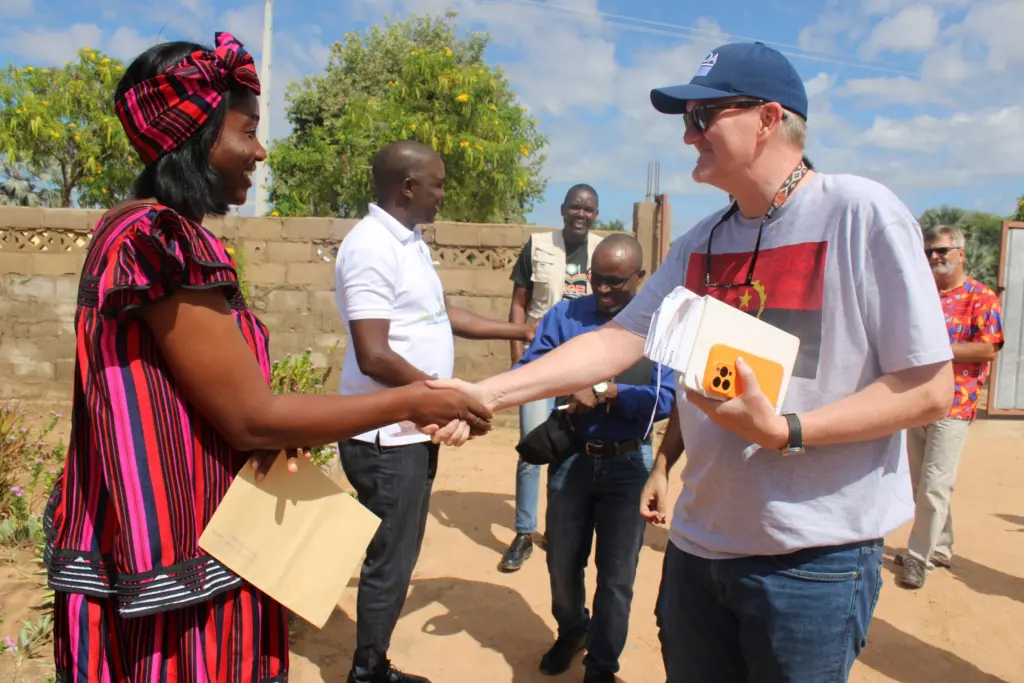
By Shimali Senanayake, World Vision U.S., with contributions from the ANGEL Angola team From warehouses storing U.S.-provided commodities to school kitchens se…
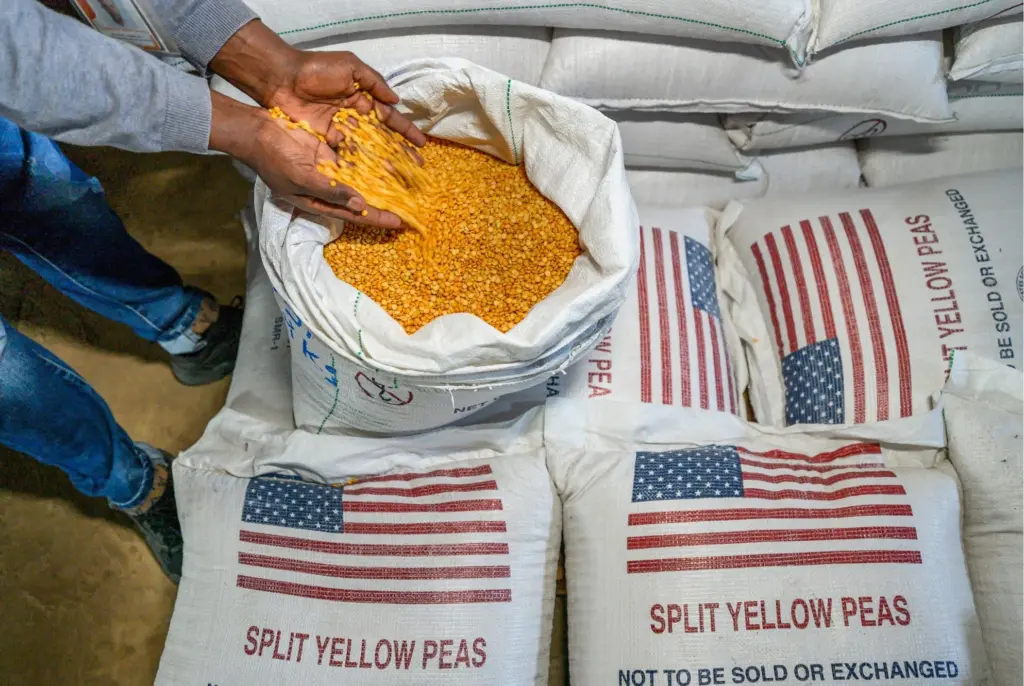
By Hannah Chargin, Director of Government RelationsIn northern Mozambique, I once led a group of congressional staffers visiting World Vision’s work in the reg…
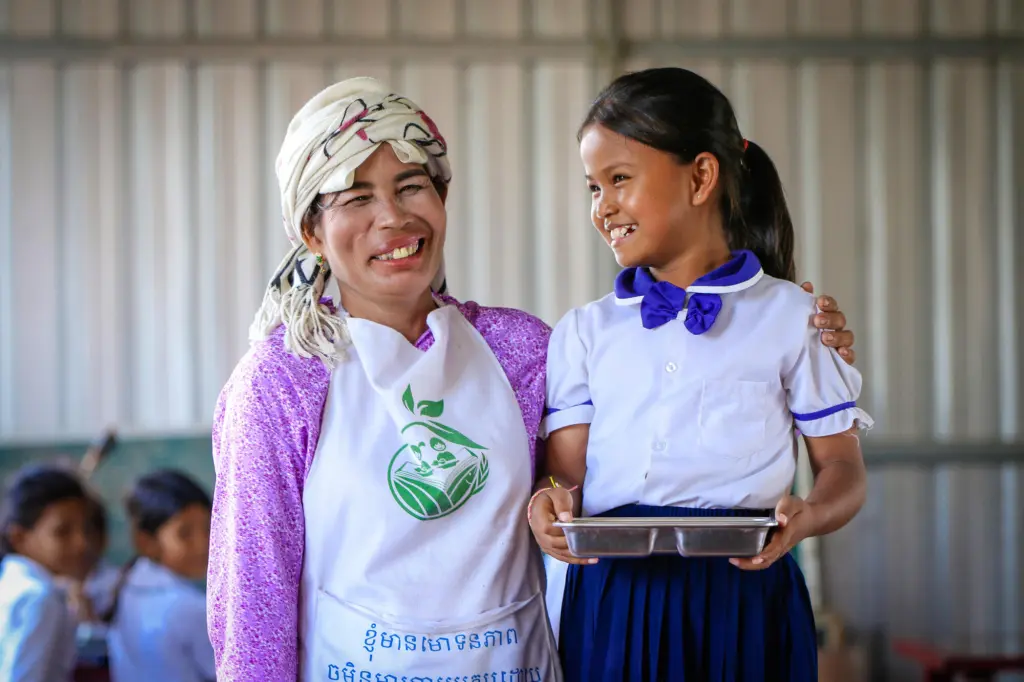
Continuing our School Meals Day series, this blog expands the lens beyond the classroom to examine how school meals function as a community platform connecting…
