
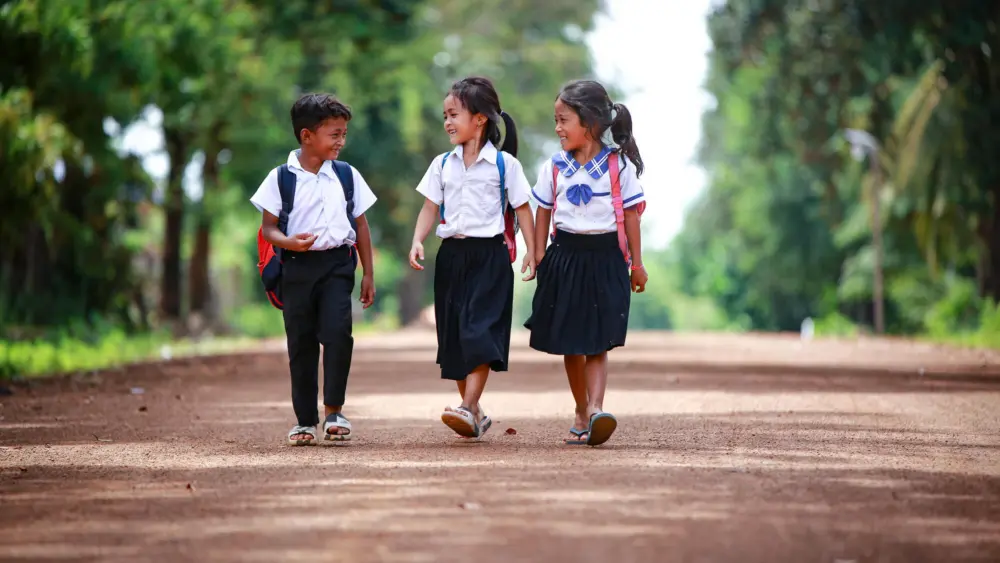
This blog launches a four‑part series exploring how school meals move from meeting children’s most immediate nutritional needs to strengthening education systems and communities for the long term.
A school meal is often described simply as food on a plate. In practice, its impact begins much earlier and extends much further. For millions of children in food-insecure contexts, the meal they receive at school may be the most reliable source of nutrition they have all day. When that meal is nutritionally balanced, safely delivered, and consistently available, it supports physical growth, cognitive development, and the capacity to focus and learn.
By Kathryn Reider, Sr. Technical Advisor, Food Security & Livelihoods, World Vision
Some kids race to school for recess. Others can’t wait for math class. No matter what draws them in, every child needs the energy to get there, focus, and thrive — because a nourished child is a child ready to learn, grow, and reach their full potential.
A daily school meal provides fuel for curiosity, creativity, learning, and growth. When meals provide the right balance of macronutrients and essential vitamins and minerals, they help children grow stronger bodies and sharper minds, giving them the foundation to thrive both in school and beyond.
Through the World Vision partnership with the McGovern-Dole International Food for Education and Child Nutrition Program of the U.S. Department of Agriculture (USDA), schools in food- and nutrition-insecure communities receive high-quality U.S. agricultural commodities produced by American farmers, ranchers, and producers. This partnership strengthens global food security while supporting livelihoods at home — a powerful farm-to-school model operating across borders.
Research consistently shows that school feeding is linked to improved educational outcomes.1 But not just any meal will do. Growing children need nutrient-dense foods that meet their biological needs, especially in contexts where high rates of chronic malnutrition or stunting (defined as poor linear growth for their age, often accompanied by diminished cognitive development). Evidence shows that stunted children’s diets frequently lack high-quality protein, including essential amino acids, essential fatty acids, and critical micronutrients such as calcium, phosphorus, vitamin D, vitamin B12, and choline.2
World Vision designs programs with this science in mind.
From 2014–2019, World Vision’s Children Reading and Nutrition (CREAN) project in Nicaragua — funded through the McGovern-Dole International Food for Education and Child Nutrition Program of the U.S. Department of Agriculture (USDA) — served approximately 40,000 meals every school day. Meals included fortified rice, fortified vegetable oil, fortified corn-soy blend, small red beans, and cornmeal provided through USDA commodities. Fortification plays a vital role in resource-constrained settings, helping ensure children consistently receive the micronutrients they need to grow, concentrate, and succeed.
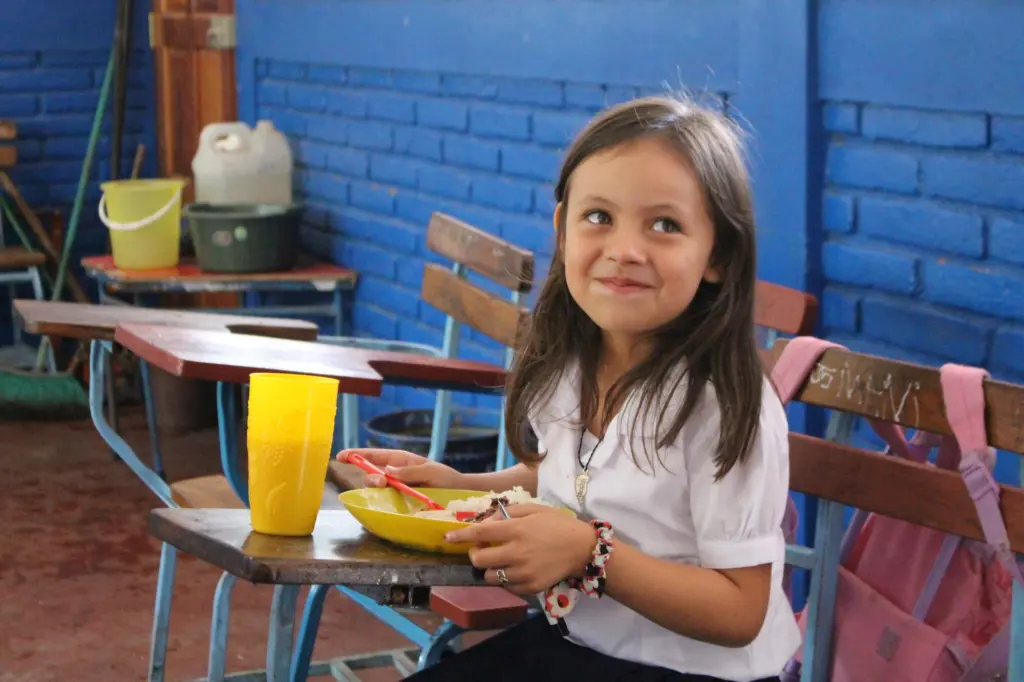
To complement staple foods, the program incorporated locally and regionally procured carrots, cabbage, tomatoes, and onions twice a week, and eggs three times a week — adding dietary diversity and high-quality protein. CREAN also hosted healthy food fairs to promote diversified diets at home. Schools with land and sustainable water sources established demonstration gardens, with 60% of the harvest used directly in school meals — building local ownership and long-term sustainability.
But nutritious food can only do its job if children are healthy enough to benefit from it.
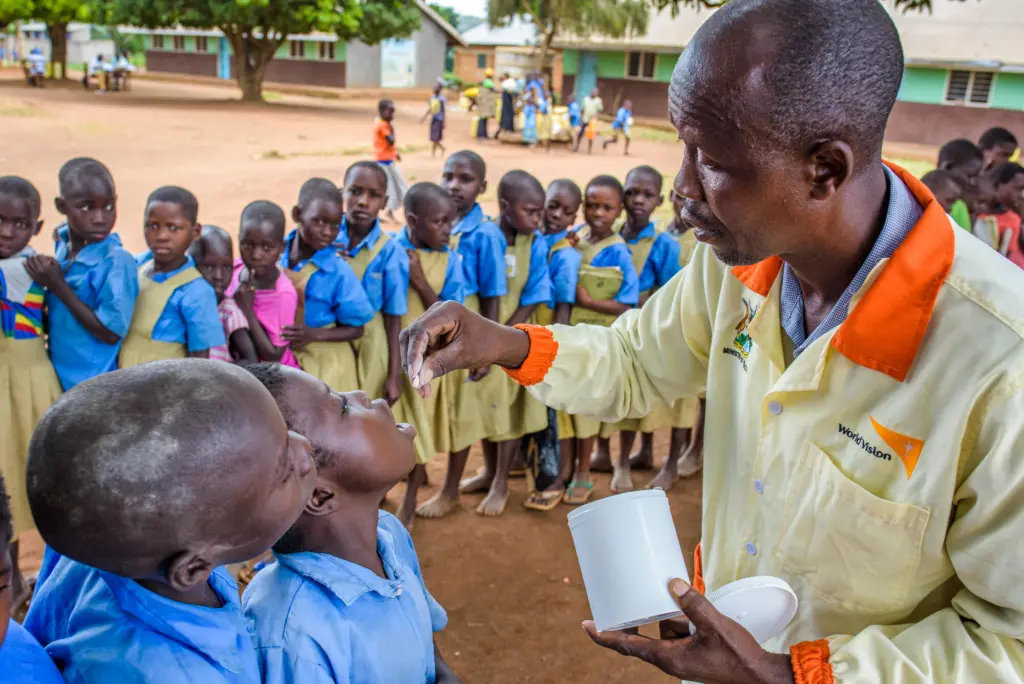
Soil-transmitted helminths (intestinal worms) affect roughly one-third of the world’s population, particularly in low-resource settings.3 These parasites compete for micronutrients in the small intestine, feed on blood and tissue — leading to iron and protein loss — and can impair digestion and nutrient absorption. They also reduce appetite, limiting food intake even when meals are available.4
A simple, evidence-based solution is deworming treatment every six months.
World Vision partners with Vitamin Angels to provide deworming medicine alongside vitamin A and iron supplementation within school feeding programs, complementing government health services and helping reduce complications such as anemia. Integrating nutrition and health interventions helps ensure that children can fully benefit from the meals they receive.
This is what state-of-the-art school feeding looks like:
- Science-driven nutrition.
- Strategic global partnerships.
- Local food systems strengthened.
- Health interventions integrated.
- Sustainability built in.
A nutritious meal served daily represents an investment in the next generation. Through innovation, evidence, and partnership, World Vision is helping children arrive at school nourished, healthy, and ready to learn — and prepared to shape the future.
Next up? How school meals translate into measurable learning gains — and why that matters for education systems and long-term development.
Sources:
1 Wall, C., Tolar-Peterson, T., Reeder, N., Roberts, M., Reynolds, A., & Rico Mendez, G. (2022). The impact of school meal programs on educational outcomes in African schoolchildren: A systematic review. International Journal of Environmental Research and Public Health, 19, 3666. https://doi.org/10.3390/ijerph19063666
2 Reynolds, A., Tolar-Peterson, T., Roberts, M., Wall, C., Reeder, N., Pylate, L., Mathews, R., & Rico Mendez, G. (under review). Nutrients associated with stunting among children in sub-Saharan Africa: A systematic review. Manuscript under review.
3 Hotez, P. J., Molyneux, D. H., Fenwick, A., et al. (2007). Control of neglected tropical diseases. New England Journal of Medicine, 357(10), 1018–1027. https://doi.org/10.1056/nejmra064142
4 Crompton, D. W. T., & Nesheim, M. C. (2002). Nutritional impact of intestinal helminthiasis during the human life cycle. Annual Review of Nutrition, 22(1), 35–59. https://doi.org/10.1146/annurev.nutr.22.120501.134539
