
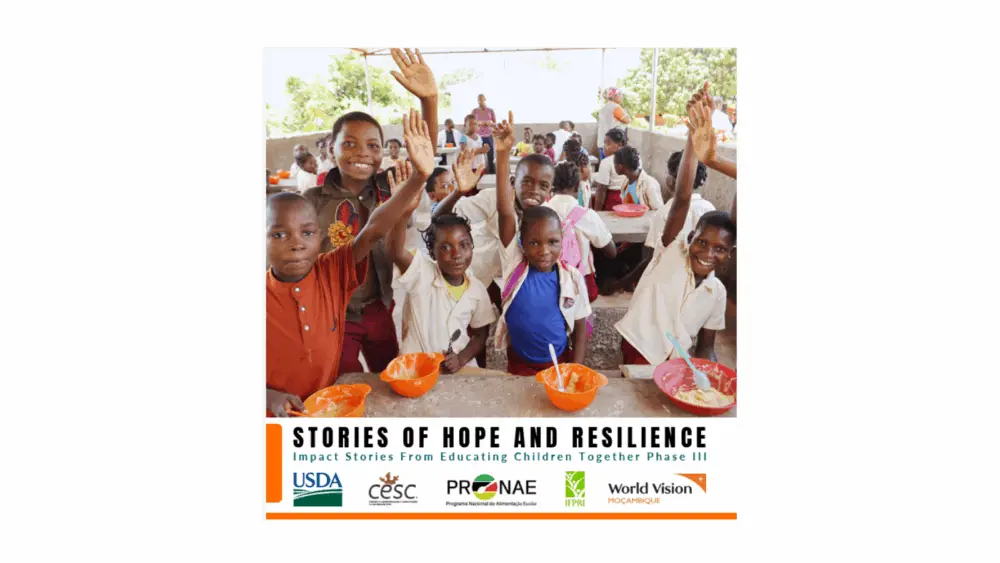
After 69 months of sustained partnership, learning, and impact, Educating Children Together – Phase III (ECT-3) has come to a successful close. Implemented in the districts of Muecate and Nacarôa, in Nampula province, northern Mozambique, the program was spearheaded by World Vision in close collaboration with government institutions, communities, and local partners, the program was made possible through the McGovern-Dole International Food for Education and Child Nutrition Program of the United States Department of Agriculture (USDA) — whose support leaves behind stronger systems and a foundation for lasting change.
This communication booklet brings together the stories behind those results. It reflects an approach closely aligned with the USDA priorities — advancing child nutrition, strengthening local food systems, promoting sustainability, and grounding action in evidence and community ownership.
Readers will meet children whose confidence and futures were transformed through literacy. From joyful reading competitions that nurtured self-belief, to community-based reading camps that sustained learning beyond the classroom, ECT-3 demonstrated how preserving and strengthening local learning spaces helps children thrive academically and socially. These stories underscore a simple truth: literacy unlocks opportunity when it is rooted in community-led interventions.

The booklet also highlights how school meals helped children like Maria stay in school, learn with focus, and dream beyond daily hunger. School feeding, central to USDA’s commitment to nutrition security, was designed to go beyond short-term support. By linking schools with local farmers, the program strengthened host-country systems, supported livelihoods, and advanced sustainability through national ownership of food supply chains.
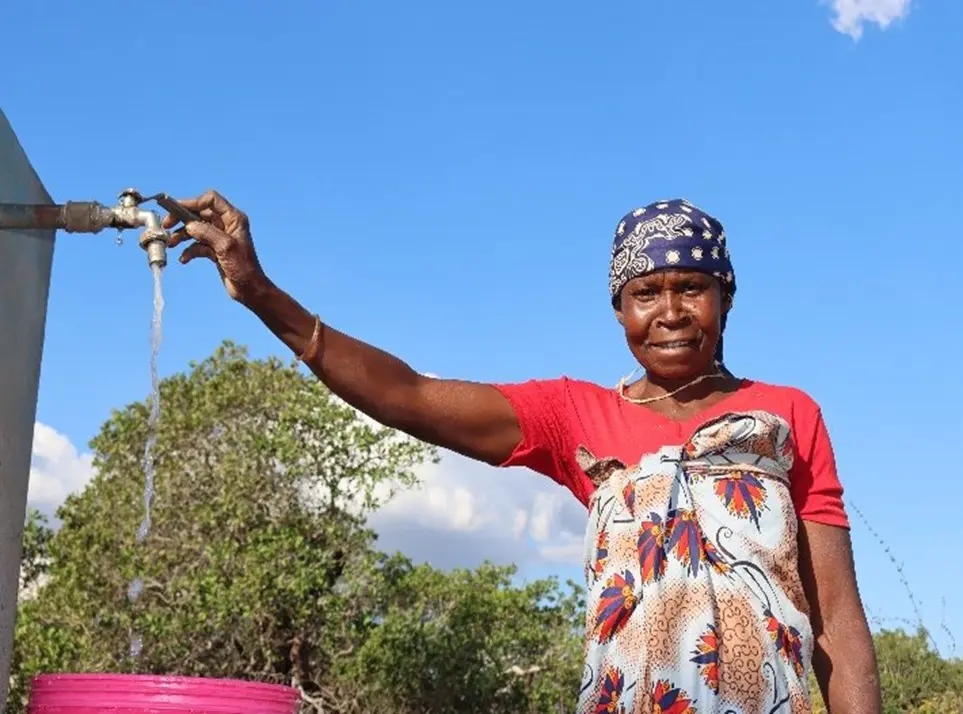
Access to clean water is another powerful theme. In Tulua, safe water spared children from long and dangerous journeys, improved health and hygiene, and created safer school environments. Through revitalized WASH committees, communities took responsibility for maintaining water infrastructure, reinforcing local leadership and long-term resilience.
The booklet also captures stories of recovery and care, including families overcoming malnutrition through community-based nutrition support and behavior change — an approach aligned with USDA’s focus on prevention, early intervention, and evidence-based health outcomes. Parents and teachers joining forces to improve school safety further illustrate how empowered communities become partners in safeguarding children’s wellbeing.
As ECT-3 concludes, this collection stands as evidence of what integrated, locally anchored programming can achieve: healthier children, stronger schools, resilient communities, and sustainable systems working together to realize hope, joy, and justice for every child.
By Shimali Senanayake, Senior Communications Officer, World Vision U.S.
