Research
An evaluation of World Vision’s Citizen Voice and Action (CVA) approach under the Nobo Jatra program in Bangladesh found that CVA successfully strengthened ser…
FSL
Health
Locally Led Dev
WASH
Strong community systems are essential for achieving and sustaining positive outcomes in health, nutrition, and WASH. These systems include the structures, processes, and people that support services and initiatives at the community level — spanning both formal systems (such as health services) and informal ones (such as social groups and networks).
World Vision places community system strengthening at the center of our strategy to drive long-term impact in the health sector. Through our Citizen Voice and Action (CVA) model we empower communities to collaborate with their governments in advocating for and securing promised services. Our Nurturing Care Groups educate households on lifesaving health practices and provide a platform for community coordination and mobilization. We invest in training and equipping community health workers to deliver services directly to households and support community-based monitoring as a tool to track progress and identify gaps.
Additionally, in partnership with the Core Group Partners Project we’ve led efforts in integrated community-based surveillance and cross-border collaboration to reach nomadic and mobile populations. These approaches engage local leaders and influencers, which has been critical to achieving measurable progress.
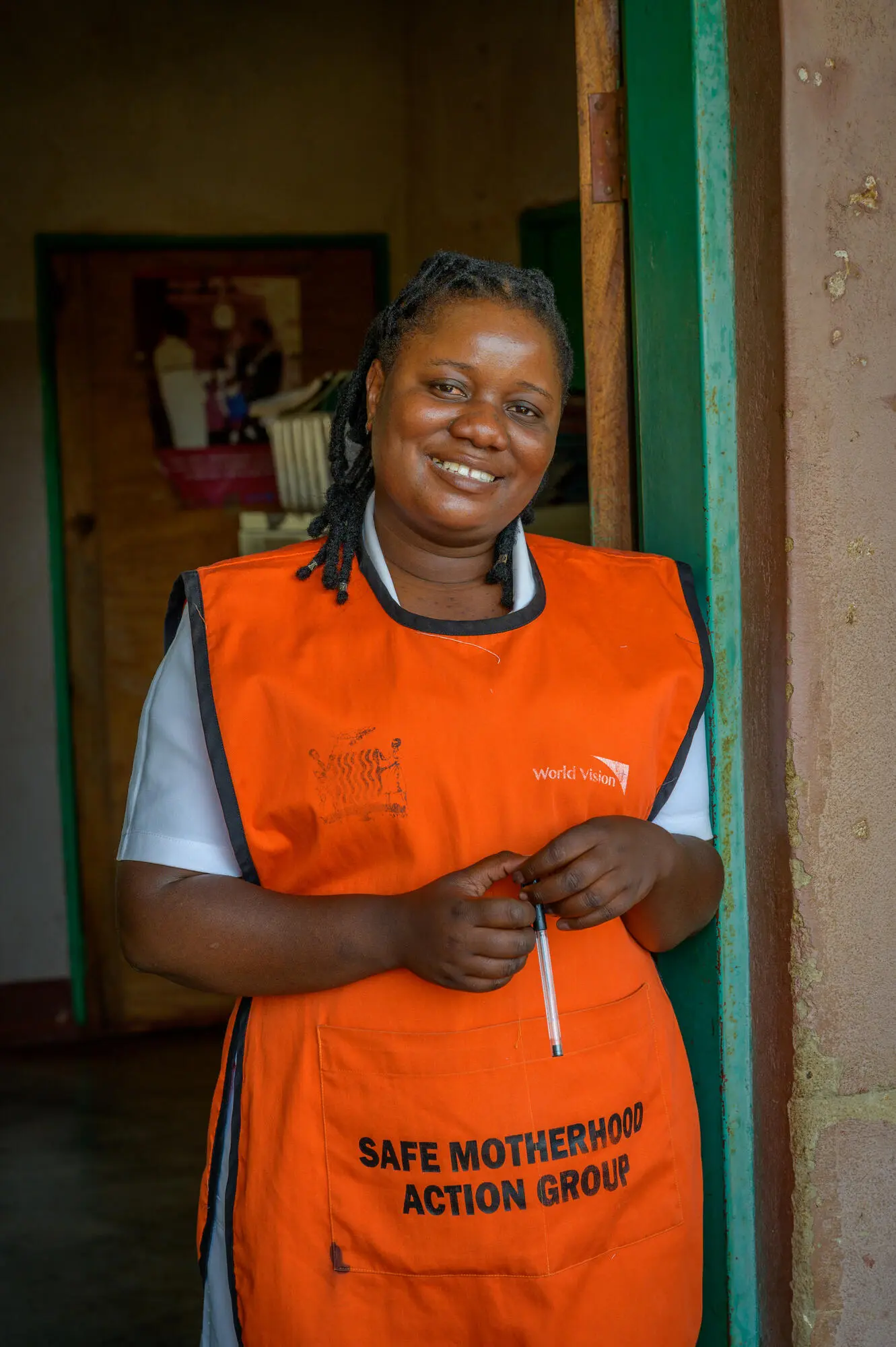
Many of World Vision’s investments to build healthy communities rely on community health workers (CHWs). CHWs are trusted community members trained to deliver basic health services. While they are not professionally licensed, CHWs play a critical role in promoting healthy behaviors, treating common illnesses, and connecting families to the broader health system. World Vision equips CHWs with the training, tools, and support they need to be effective frontline caregivers.
World Vision supports CHWs to deliver proven, cost-effective approaches, including:
Integrated community case management (iCCM) is a comprehensive strategy to train, support, and supply CHWs to diagnose and treat multiple common illnesses for families with limited or no access to health facilities. More than half of all deaths among children under five are caused by diseases that are preventable and treatable through simple, affordable interventions. Timely and appropriate treatment of childhood pneumonia, diarrhea, and malaria is one of the most effective ways to reduce child mortality.
In many countries with high rates of child mortality, facility-based health services alone do not provide adequate access to treatment — especially within the crucial first 24 hours after symptoms begin, when prompt treatment is essential to saving lives. To address this gap, World Vision works alongside communities to advocate with governments, the private sector, and civil society for the expansion and strengthening of iCCM services.
In partnership with ministries of health, we build the skills and capacity of CHWs and provide the necessary tools and supplies so that quality, community-based healthcare is accessible to the children and families that need it most.
Timed and targeted counseling is a family-inclusive behavior change communication approach focused on supporting families with young children, especially the most vulnerable and marginalized. This method delivers a wide range of lifesaving health messages at critical time through engaging, interactive storytelling.
The approach is dialogue-based, allowing counselors to assess families’ current needs and practices, then working collaboratively toward gradual improvements when gaps exist. A key feature of timed and targeted counseling is its emphasis on involving both parents and other decision makers, promoting a family-inclusive and gender-transformative model of child health and development that highlights the important role fathers play.
This counseling can be delivered by various community members, including trained CHWs, guide mothers, or other volunteers.
Community-based management of acute malnutrition (CMAM) is a proven methodology for identifying and treating acute malnutrition in young children through active case-finding and triage. Developed by Valid International and endorsed by the U.N. agencies UNICEF and WHO, CMAM empowers community volunteers to detect malnourished children early and begin treatment before their condition worsens. Most children with severe acute malnutrition are treated at home by their caregivers using Ready-to-Use Therapeutic Foods alongside routine medical care.
Digital health innovations support community health workers, clinics, and hospitals collect and analyze data and make informed health decisions for the people they serve — especially in areas with limited healthcare access.
Learn more about how CHWs helped reduce malnutrition rates in Zambia.
Since 2005, World Vision’s Citizen Voice and Action (CVA) approach has been implemented in more than 700 programs across 48 countries, contributing to improvements in thousands of health clinics and schools, as well as in water access, agricultural extension services, and child protection. CVA promotes social accountability by equipping citizens with knowledge of the basic service rights their governments have promised them. Communities use scorecards to assess the availability and quality of local services, rate their satisfaction, and collaborate with decision-makers to review results and develop action plans for improvements. They continue working with the government and local partners to ensure that those commitments are fulfilled.
CVA has a strong evidence base, particularly within the health sector. In Bangladesh, an evaluation of CVA in our Nobo Jatra program found that the approach inspired institutional actors to improve their performance and become more motivated in their roles. It helped local institutions coordinate more effectively, with changes even influencing higher levels of government. Notably, after CVA was introduced, 88% of targeted community health clinics met government standards — compared to only 49% prior to implementation. Read more in this summary of the findings.
Community-based monitoring provides visibility into how well community systems are functioning and indicates where improvements are needed. While local data is often highly specific and valuable for grassroots decision-making, it can be difficult to generalize for policy-level use. Within the framework of Citizen Voice and Action (see previous question), World Vision helps communities aggregate local monitoring data to identify trends and gaps across broader districts or regions. This process strengthens accountability and informs more responsive policies and governance for community-based services.
An evaluation of World Vision’s Citizen Voice and Action (CVA) approach under the Nobo Jatra program in Bangladesh found that CVA successfully strengthened ser…
The CORE Group Polio Project (CGPP), operating over a 20-year period across five countries, provides valuable insights into the role of community mobilization …
