
Empowering the next generation for success
History’s largest adolescent and youth population is at a crossroads. Nearly 90% of today’s 1.8 billion young people are concentrated in developing countries where they are disproportionately affected by poverty, violence, poor health, unemployment, and exclusion. With too few opportunities for quality education, gainful work, and participation in community life, half of the world’s young people are neither learning nor working. Stuck and frustrated, they risk becoming a destabilizing force.
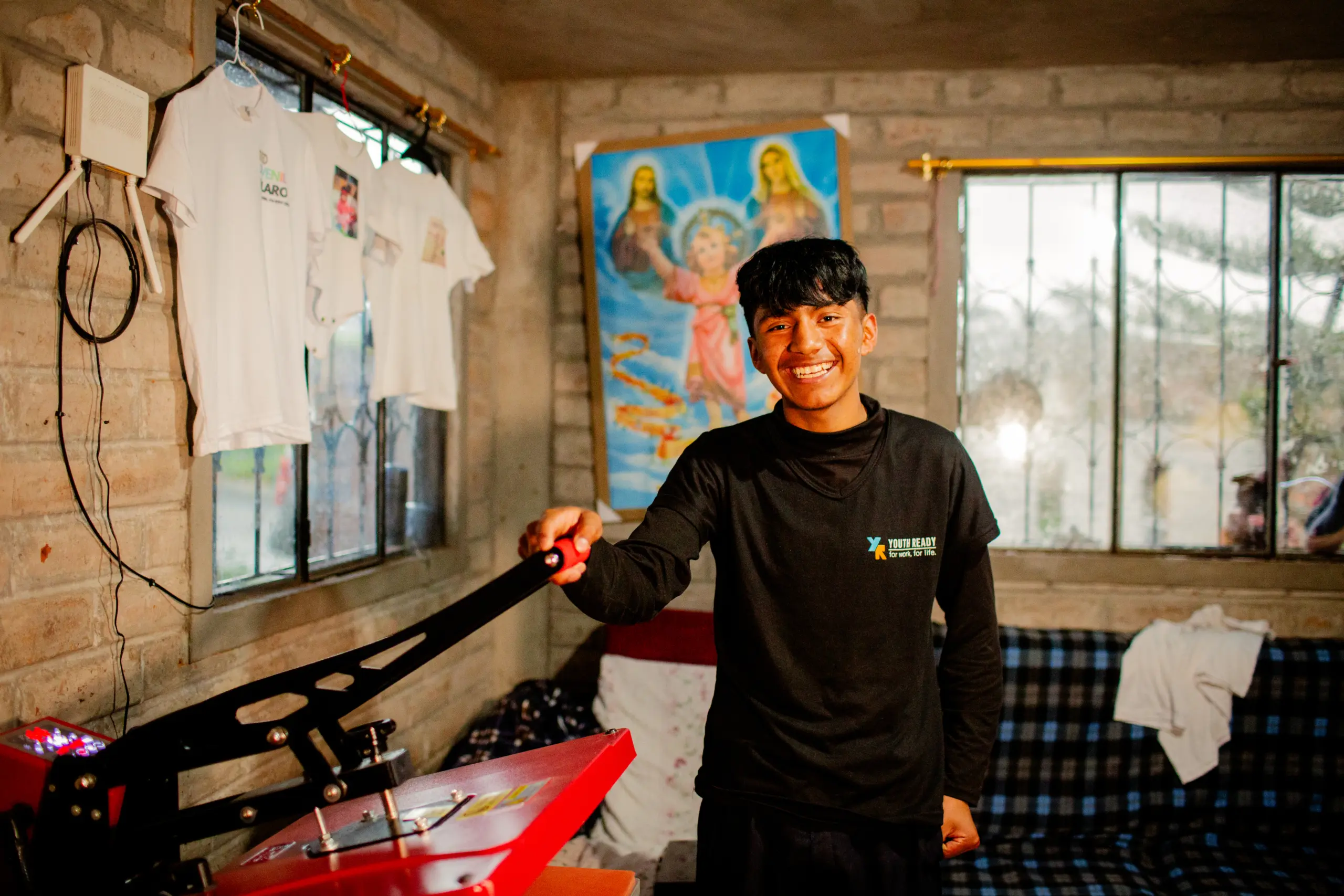
World Vision believes that healthy, productive, and engaged youth can contribute to peace and prosperity as positive change agents in their own lives and in their communities. Grounded in this hope, World Vision created two evidence-based Positive Youth Development (PYD) programming models: Impact+ and Youth Ready. We work with families and communities to create a safe and supportive environment of youth-friendly services, economic and civic opportunities, and policies that empower young people to define their identity, strengthen their agency, build their skills and personal assets, gain financial independence, contribute positively to their communities, and establish a lasting sense of belonging.
Youth FAQs
What is Positive Youth Development?
The PYD framework has become the global standard for informing evidence-based youth programming. It focuses on four domains of change critical to achieving a vision of healthy, productive, and engaged youth:
- Assets: Youth have resources, skills, and competencies for success. These can include social and emotional skills, vocational training, critical thinking, and communication.
- Agency: Youth have a positive identity and recognize their ability to change their lives by making their own decisions, planning, and persisting in positive actions.
- Contribution: Youth engage with opportunities to generate positive change in their own lives and to improve the well-being of their communities.
- Enabling environment: The social, normative, structural, and physical environment provides protection, recognition, and support for youth to grow and thrive.
What skills matter most for youth?
World Vision partnered with the World Bank and Institute for Research into Youth Thriving and Evaluation to create a unique skills framework based on six identity dimensions of youth empowered for success at work and in life. These “Youth Superpowers” identities include creative visionary, inclusive collaborator, reflective problem solver, empathetic change-maker, resilient agent, and productive citizen. Each identity is defined by a cluster of powers, which are learned and strengthened through project participation, and include skills (like financial and digital literacy, career planning, and entrepreneurship), competencies (like teamwork, communication, self-care, and problem solving) and mindsets (like sense of purpose, curiosity, courage, and perseverance). In all, 37 powers prepare healthy, productive, and engaged youth for economic opportunities and empower them to contribute to the greater good and to care for others.
What is the role of the private sector?
The private sector is engaged to support youth through:
- Targeted training: Informing the content of vocational and soft-skills training to ensure relevancy to local market conditions.
- Work opportunities: Creating new opportunities for internships, on-the-job training, and employment for vulnerable and excluded youth.
- Financial inclusion: Developing youth-friendly financial products and services to improve financial education, increase savings, and finance youth entrepreneurship.
What are some examples of World Vision’s work in this area?
Guatemala: Puentes
From 2017 to 2024, World Vision led a consortium of organizations to implement the USAID-funded Puentes Project in Guatemala. This positive youth development initiative aimed to improve the quality of life and unlock the potential of youth aged 15 to 29 in the Western Highlands region.
The Puentes Project provided youth with soft skills training and created opportunities to pursue goals in education, employment, and entrepreneurship. It offered a wide range of services, including alternative education, vocational training, STEAM (Science, Technology, Engineering, Arts, and Mathematic) education, agricultural training, entrepreneurship support, workforce readiness training, job placement assistance, psychosocial support, and vocational orientation.
The project worked closely with the government of Guatemala, the private sector, and civil society to equip youth with the skills needed to meet emerging market demands and help vulnerable youth continue their education, find employment, become entrepreneurs, and improve their overall quality of life—thereby addressing the root causes of irregular migration.
Through the Puentes Project, youth were empowered to take control of their future by gaining the knowledge, skills, and opportunities to improve their income and overall well-being. Over 34,000 youth completed the project’s soft skills training. Of these, 17,000 participated in alternative education programs, over 17,000 completed vocational training, more than 2,100 were connected to internships or work practicums, over 8,000 found new or better jobs, and more than 6,900 started businesses as entrepreneurs.
Central America: Reaching Independence Through Support and Empowerment (RISE)
World Vision’s RISE Project is a positive youth development (PYD) initiative that supports adolescents and youth in El Salvador, Guatemala, and Honduras. RISE aims to help young people aged 12 to 29 develop a positive self-identity, a sense of purpose, curiosity, teamwork, communication skills, agency, and hope as they continue their education, engage in economic opportunities, and contribute to the greater good by caring for others. The project empowers youth to be leaders, agents of change, and active citizens in their communities. The project focuses on strengthening systems by building the capacity of youth-led and youth-serving organizations, including those in government, the private sector, and faith-based organizations, while also fostering networks with stakeholders such as financial organizations.
In 2024 and 2025, over 6,100 adolescents aged 12 to 17 completed Teens Ready, and more than 4,400 youth aged 15 to 29 completed Youth Ready. To date, over 900 youth have stayed in or returned to education, over 240 have participated in an internship or work practicum, over 570 have been connected to jobs, and more than 590 have launched their own businesses.
