
Bridging the Gap
World Vision’s adolescent education programming focuses on increasing students’ retention and completion of primary school to support a strong transition to lower secondary school. According to UNICEF, “Although 92 per cent of children globally have entered primary school, over 40 per cent of these students do not make it to upper secondary school.” Many drop out between upper primary school and secondary school due to a myriad of barriers that they face as they progress through their education.
World Vision’s approach uses a socioecological framework to engage children, teachers, caregivers/parents, faith leaders, and other adults in the community to promote a child-friendly, safe, nurturing, equitable, and inclusive environment where all young adolescents (defined as ages 10 to 14 by the World Health Organization) can learn, remain in school, and safely transition to secondary school to continue their education.
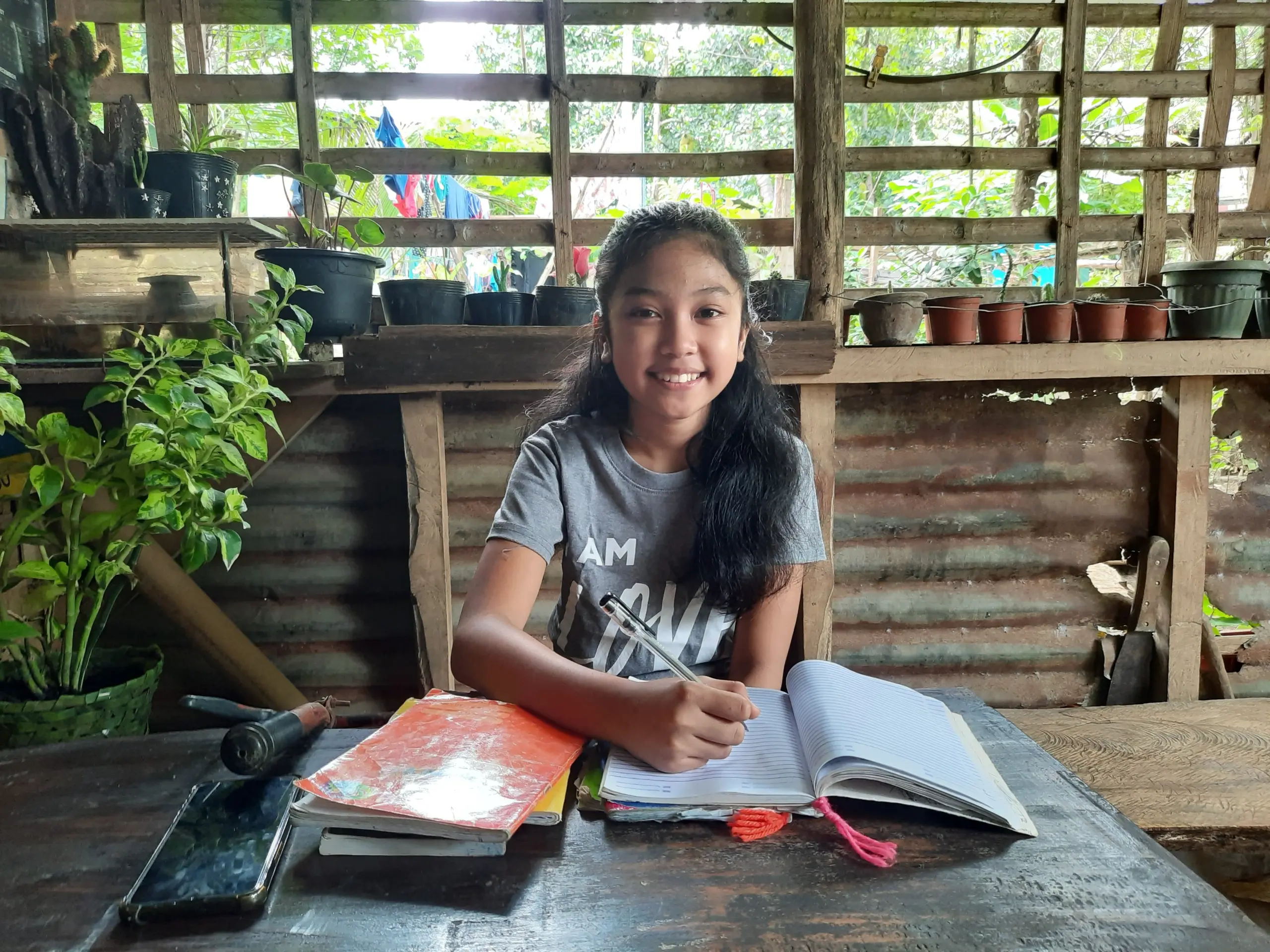
Adolescent Education FAQs
Why is adolescent education important for lifelong learning?
Early adolescence is a period of complex transitions for many young people, which is compounded in low-resource settings that tend to exacerbate challenges. Therefore, education is critical for providing young people with a sense of stability and security to remain in primary school and move on to attain their secondary education.
What is World Vision’s approach to adolescent education?
World Vision believes in fostering a safe learning environment to increase primary school retention, completion, and transition to secondary, especially for the most vulnerable girls and boys — including children with disabilities. Globally, physical and psychological punishment, verbal abuse, bullying, and sexual violence in schools have been repeatedly reported as reasons for absenteeism, dropping out, and lack of motivation for academic achievement. World Vision is responding to reduce absenteeism and drop-out rates by cultivating school environments that are free from gender-based violence, which disproportionately affects girls.
What are some examples of World Vision’s efforts and results?
Safe and Nurturing Schools approach
World Vision implemented the Safe and Nurturing Schools approach in Malawi to prevent and respond to gender-based violence in and around schools. The program uses a whole-school approach, building school leadership and community engagement to create safe learning environments. It includes establishing a code of conduct, enhancing the capacity of teachers and educational staff, and empowering children with knowledge of their rights, participation, and equality.
Baseline findings indicated several potential drivers of school-related gender-based violence, such as community acceptance of violence, reluctance to report incidents, cultural and societal beliefs about traditional gender roles, and child marriage.
World Vision’s Safe and Nurturing Schools approach is featured in the Social Norms Atlas in the Education Sector section as an example of programming that addresses social norms in education. This intervention was also adopted in similar contexts, such as in Mozambique (through the USAID-supported Advancing Girls Education program) and in Zambia (supported by the Educate a Child Foundation), to address school-related gender-based violence and ensure children’s safety in schools.
Teens Ready
World Vision staff in Central America developed Teens Ready for adolescents aged 12 to 17 to foster continued motivation for learning and equip young people with the skills to contribute to their communities as they approach adulthood. Teens Ready aims to reduce dropout rates and boost motivation through engaging activities in art, sports, science, and technology. The program promotes a positive identity, enhances social integration, helps adolescents explore vocational interests, and strengthens their sense of purpose and belonging.
Teens Ready was introduced in 2024 in El Salvador, Guatemala, and Honduras as part of the RISE Project. To date, over 6,100 adolescents have completed the program. The curriculum has garnered widespread enthusiasm among teachers, and the project is collaborating with Ministries of Education in the three countries to expand the curriculum’s reach.
