
by Kenan Nyirenda (Program Manager, Every Child Belongs, World Vision Malawi) and Shelly Hartman Sunyak (Sr. Program Manager – Child Protection and Education, World Vision U.S.)
Why this issue matters now
Globally, an estimated one in ten children lives with a disability, yet children with disabilities remain among the most likely to be left behind in development efforts — particularly in low-resource and fragile contexts. In Eastern and Southern Africa alone, nearly 29 million children live with functional difficulties, making disability inclusion a core development challenge.
Psychosocial difficulties, including anxiety and depression, affect more children than physical or sensory impairments — underscoring the importance of systems that address well-being, protection, and participation alongside health and education.
Stigma, discrimination, and poverty are deeply interconnected and mutually reinforcing. Children with disabilities are often excluded from social and economic life due to stigma, which can reduce household income opportunities and deepen vulnerability. At the same time, poverty can intensify stigma and negative perceptions, further entrenching exclusion.
What makes this moment urgent is growing systems strain. Humanitarian shocks, climate-related disasters, and under-resourced public services are stretching families and frontline workers thin. Without deliberate systems designed to meet the needs of children with disabilities, they are often identified late — if at all — referred inconsistently, and supported in isolation rather than through an integrated continuum of care. Evidence from UNICEF, WHO, and World Vision shows that early, coordinated, family-centered support dramatically improves developmental, educational, and well-being outcomes.
GEDSI thinking as the foundation
Gender Equality, Disability and Social Inclusion (GEDSI) provides the foundation for how World Vision approaches inclusive development — helping ensure that those most at risk of exclusion are meaningfully reached and supported through stronger, more connected systems.
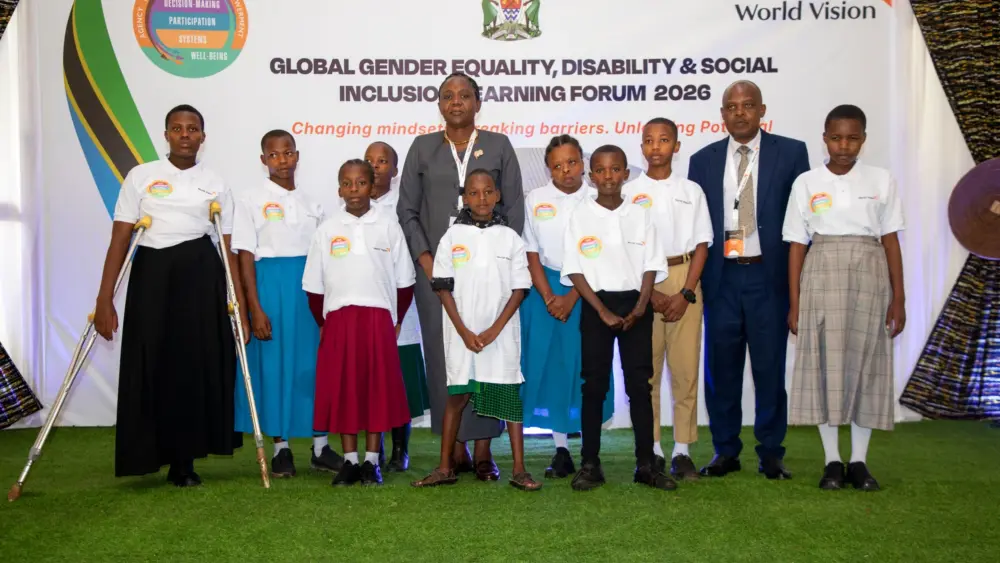
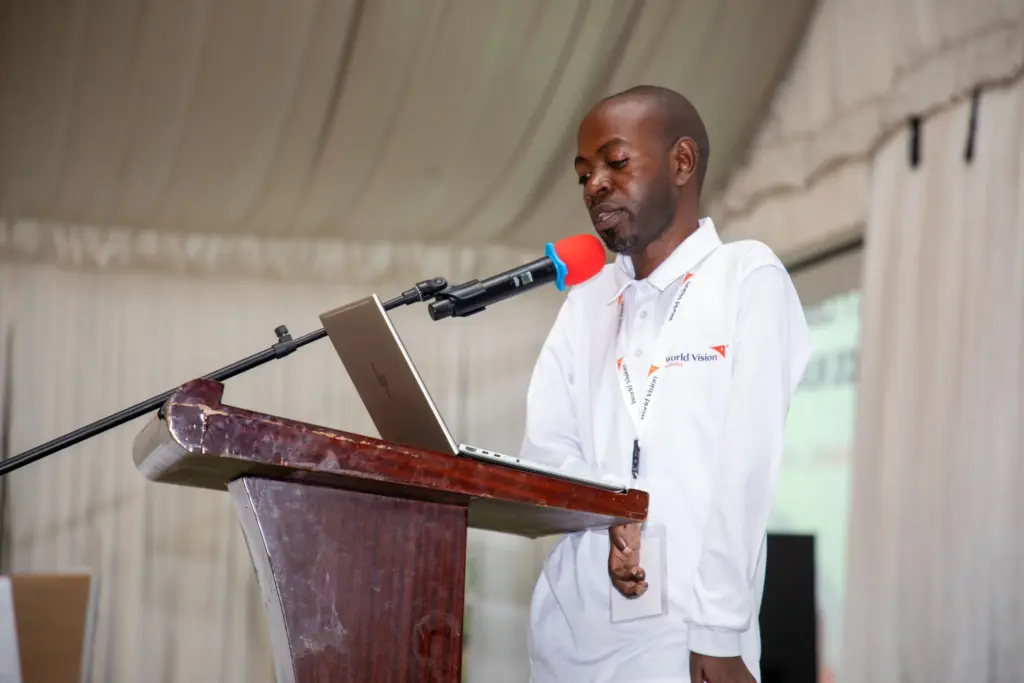
World Vision hosted its annual GEDSI Forum from March 2 to 5, 2026 in Arusha, Tanzania. For the first time, a Disability track allowed practitioners and policymakers to discuss actionable plans and practical approaches for implementation and systems design. The conversation was set in motion by six children with disabilities who presented their demands directly to a government minister. The dialogue then shifted to how disability inclusion can function across a country through coordinated case management, referrals, safeguarding, and parent support.
A recurring theme was systems coherence: how community volunteers, service providers, local government, and families interact — and where those interactions break down. Lessons from World Vision’s Every Child Belongs (formerly Able to Thrive) Phase 1 initiative were shared to demonstrate that improvements for children with disabilities depend less on isolated services and more on how well systems connect and follow through.

Systems matter more than programs: Key insights
1. Poverty and stigma remain critical barriers
Many children with disabilities remain hidden in their homes due to stigma and fear, leaving them highly vulnerable to violence and abuse. In Malawi, many parents of children with disabilities report being unable to join village savings and loans groups due to stigma and the inability to meet the minimum savings requirement (as little as $0.20 per month).
Parent support groups (PSGs) — often initiated by faith leaders — encourage families to love and embrace their children, especially those with disabilities. They also play a crucial role in reducing stigma, strengthening community safety, and enabling participation in savings groups. This, in turn, helps families cover medical needs, access assistive devices and repairs, and improve overall household well-being.
2. Case management is relational
Discussions reinforced that effective case management depends on trust, continuity, and safeguarding — not just tools or forms. In Malawi, Phase 1 of the Every Child Belongs initiative provided targeted case management, referrals, and follow up for children with disabilities in five districts in Malawi from 2023 to 2025.
- In some districts 68% of children supported showed gains in functional abilities, including mobility, communication, and participation in daily activities.
- 61% of these children had never previously received a disability diagnosis — highlighting how often systems fail before programs even begin.
What shifted thinking at the forum was the emphasis on who drives case management. Parents of children with disabilities, Organizations of Persons with Disabilities (OPD) members, and long‑standing community actors bring lived experience and social trust — but only when they are backed by training, supervision, and safeguarding standards.
3. Referral systems fail when feedback is missing
Participants consistently highlighted referral systems that function as one-way handoffs, with little visibility into whether services were accessed, appropriate, or safe. Discussions emphasized the need for screening before referral, clarity on costs and roles, and feedback loops for both families and service providers.
Regional data illustrates the cost of getting this wrong. Across Eastern and Southern Africa, children with disabilities are consistently more likely to be out of school than peers without disabilities, and exclusion worsens with age and complexity of disability. At upper secondary level, out-of-school rates exceed 60 to 70% in some countries — demonstrating how early service and referral gaps compound over time.
4. Parent support groups are a critical protective intervention — not an add-on
Another strong takeaway was the central role of PSGs — not only for psychosocial well-being but for stigma reduction, advocacy, and service navigation. Every Child Belongs Phase I provides compelling evidence:
- Caregivers participating in PSGs were 57% more likely to report improved well-being.
- Their children were 42% more likely to attend school.
- 70% of parents reported being better equipped to meet their child’s learning, health, and protection needs, largely due to peer learning and facilitated support.
These findings are especially significant given that psychosocial difficulties represent the largest share of functional challenges among children in the region — positioning PSGs as a frontline response to exclusion and isolation.
Child spotlight: Frezer’s story
 |
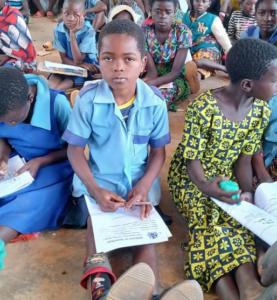 |
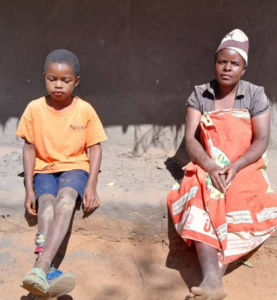
Frezer Stanley is a 9-year-old boy from Kamgunda village in Dedza District, Malawi, whose experience shows what inclusive systems can unlock. Born with clubfoot in his right leg, Frezer struggled to stand or walk properly, and repeated efforts by his mother, Chimwemwe, to seek help at local facilities went unanswered due to limited services and financial constraints. By the time Frezer started school, frequent absences and teasing from peers had eroded his confidence and his mother had largely given up hope that his condition could be corrected.
Through Every Child Belongs, Frezer was referred to the hospital for surgery, received an orthosis (a supportive brace), and now benefits from regular physiotherapy delivered by trained community health workers. Today, he walks independently, attends school consistently, plays football with his friends, and is confident and happy again.
“Before the surgery, Frezer could barely walk, and other children teased him… Now he loves going to school again.”
— Chimwemwe, Frezer’s mother
What this means for better development outcomes
When disability inclusion is treated as a system function rather than a project activity, outcomes improve across sectors. Early identification and coordinated case management increase participation in early childhood education, strengthen functional development, and reduce protection risks. Conversely, when systems fail early, exclusion accelerates — particularly in education — locking children out of opportunities by adolescence.
Every Child Belongs demonstrates what happens when systems align: children gain functional skills and greater participation in family and community life, caregivers experience improved well-being and confidence, and service providers reach more children at a lower cost.
These results reflect what becomes possible when systems are designed to include, connect, and follow through — and point to what remains at stake when they are not.
Looking ahead: Policy priorities for leaders and practitioners
1. Institutionalize early identification and case management
With one in ten children affected, disability inclusion must be a planning baseline. Governments and partners should embed early identification and disability inclusive case management within primary health, child protection, and community systems — ensuring data informs policy, budgeting, and service planning.
2. Build referral systems that prevent compounding disadvantage
The steep rise in exclusion at secondary school level demonstrates what happens when referral systems break down. Policies must prioritize continuums of care, including screening before referral, clear service agreements, feedback mechanisms, and guidance when services are unavailable — so gaps are addressed rather than transferred to families.
3. Fund and formalize parent support groups as protective infrastructure
Given strong evidence of their impact on caregiver well-being and school participation, PSGs should be resourced, safeguarded, and linked to livelihoods, social protection, and local decision-making —especially where psychosocial difficulties and stigma are prevalent.
4. Measure what changes for children — not just what is delivered
Monitoring systems must shift toward participation, well-being, safety, and transitions, disaggregated by disability, gender, and poverty status. Tracking outcomes — not only activities — is essential to preventing children from becoming invisible as they age.
References
- United Nations Children’s Fund (UNICEF). (2023). Children with Disabilities in Eastern and Southern Africa: A statistical overview of their well‑being. UNICEF ESARO.
- World Vision. (2025). Able to Thrive Phase I: Final Report (October 2023–September 2025). World Vision International.
- United Kingdom Department for International Development (DFID). (2018). Disability stigma in developing countries. UK Government.
