
Building brighter futures from the very beginning
The earliest years of a child’s life are a window of opportunity to support the emergence of literacy and numeracy skills and social and emotional competencies. Early childhood development (ECD) programs are powerful equalizers for children who live in resource-poor settings and play an important role in breaking the intergenerational cycle of poverty. World Vision’s presence at the community level enables us to build on existing local strengths, resources, and positive practices to support this stage of development with holistic, integrated approaches. As young children actively develop, we engage a continuum of actors — including parents, caregivers, teachers, schools, community members, and policymakers — to carry out contextually relevant, play-based ECD solutions and establish the strongest foundation for children’s futures.
Early Childhood Development FAQs
Why is ECD foundational for children’s learning success?
Early childhood development is a critical ingredient in lifelong learning, establishment of peaceful societies, and the achievement of the United Nations Sustainable Development Goal 4. Research concludes that ECD yields a higher return on investment than interventions that take place later in life. It is increasingly recognized as one of the most important investments that countries and families can make to help children lead productive lives.
What is World Vision’s approach to ECD?
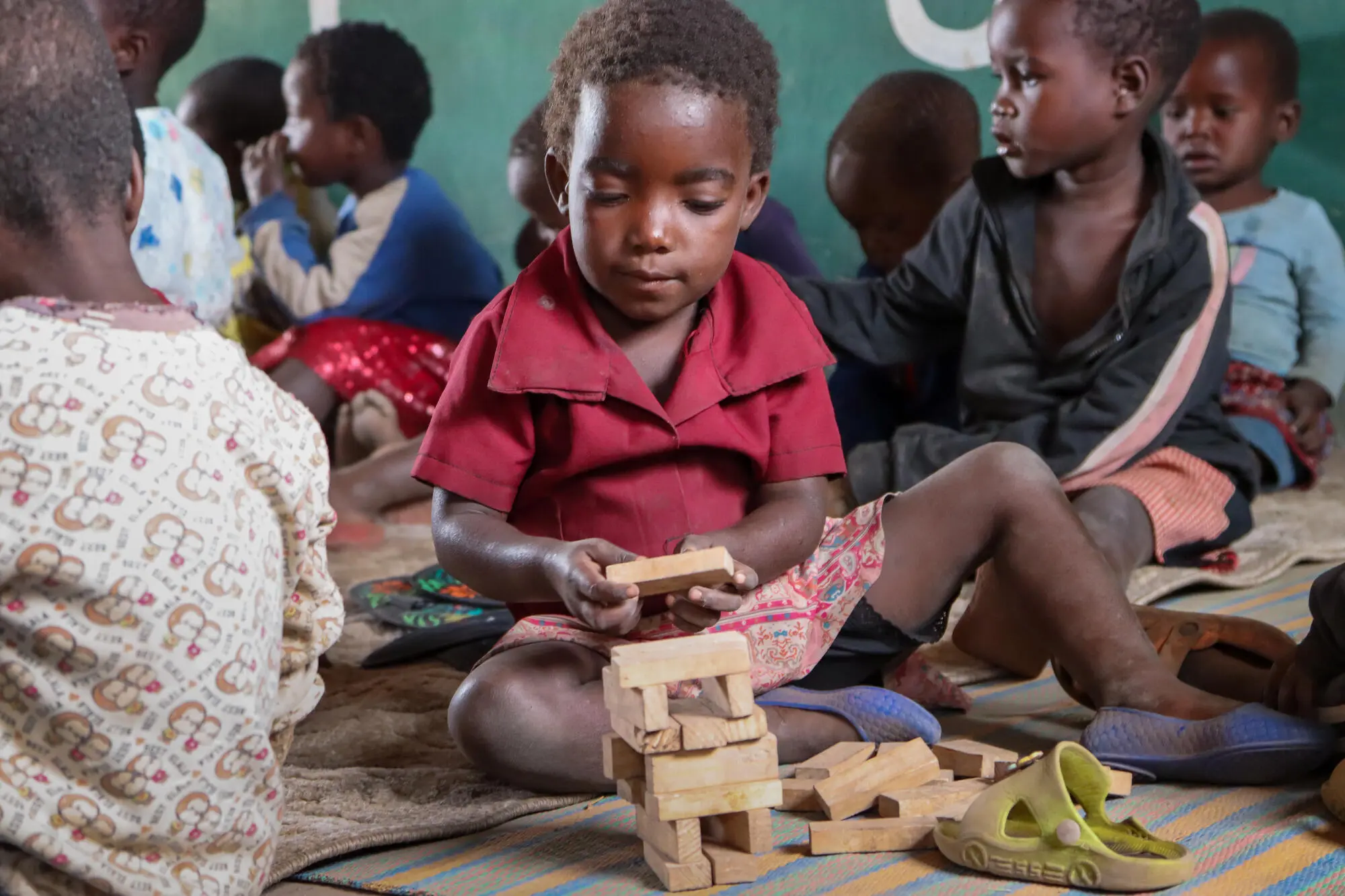
World Vision believes that all children deserve to experience life in all its fullness, and this includes the right to early childhood development (e.g., pre-primary) support. We also know that early learning starts at home with caregivers and parents. Our approach prepares young children for a successful transition to formal school. We aim to reach the most vulnerable children, ages 3 to 6, through increased access to safe and stimulating learning environments, positive parenting interventions, play materials (including locally made toys), teacher training, and policy advocacy to increase access to quality pre-primary programming.
What are some examples of World Vision’s efforts and results?
Rwanda: USAID Uburezi Iwacu (Homes and Communities) activity
From 2021 to 2025, the U.S. government-funded Uburezi Iwacu project supported families in all 30 districts of Rwanda to create home environments that encourage and foster pre-primary children’s learning by:
- Encouraging parents and caregivers to use positive parenting practices to support children’s language, literacy, and social-emotional development.
- Ensuring children have access to accessible and high-quality educational content and materials at home.
- Supporting the early identification of children with disabilities and their participation in community language, literacy, safety, and social-emotional development interventions.
Through more than 30,000 home visits, the project supported families of pre-primary learners to apply what they learned in parenting sessions, promoting school readiness, inclusive and playful parenting, and the development of language, literacy, and social-emotional skills.
By the project’s end in March 2025, Uburezi Iwacu had supported more than 1.1 million children, including more than 22,000 children with disabilities, along with more than 900,000 parents and caregivers and more than 26,000 volunteers. The share of fathers engaged in their children’s reading and learning rose from 21% at baseline to 40%, and 93% of households had new reading materials and toys to support children’s literacy, including 76% that made them from local resources. The share of parents and caregivers who agreed that harsh physical punishment is appropriate fell from 45% at baseline to 17% by the end of 2024.
The project also trained ECD caregivers and teachers to improve emergent literacy, support social-emotional learning, and develop learning corners for early stimulation and literacy development. They also received training on creating and using play materials for children with special needs.
Uburezi Iwacu also carried out a comprehensive, evidence-based social and behavior change communication strategy through multiple channels, targeting diverse audiences and influential groups, to promote positive, inclusive, and playful parenting for pre-primary and primary-aged children.
Every Child Belongs
Every Child Belongs supports children with disabilities and their families through early identification, screening, referral, and follow-up services. It also works to change attitudes and behaviors that stigmatize and marginalize people with disabilities and helps parents and caregivers gain the confidence, skills, and income to care for their children and access essential services.
In its first phase (October 2023–September 2025), the project reached 5,042 children with disabilities in five districts in Malawi. Of these children, 61% had never received a disability diagnosis. Caregivers reported positive changes in functioning for 49% of children, and the project distributed more than 1,500 assistive devices, including 1,026 wheelchairs. Children whose parents joined parent support groups were 42% more likely to attend school.
In 2026, the project expanded to all 10 districts in Malawi and to some of Rwanda’s most remote communities. As of June 2026, it had reached 17,780 children in Malawi and 15,458 in Rwanda.
Early Childhood Development Research & Resources
Research
A parenting intervention in Rwandan refugee camps aimed to improve early childhood development (ECD) and caregiving practices among families with children unde…
Child Protection
Disaster
Health
