Research
The International Food Policy Research Institute (IFPRI) spearheads the SPIR II learning agenda, including formative studies conducted during the first year of…
FSL
Health

World Vision supports maternal, newborn, and child health by improving care in the first 1,000 days. We train health workers, promote safe childbirth, and educate families on nutrition and disease prevention to reduce mortality and give children a healthy start.
Wellness extends through generations, building upon a continuum of reproductive, maternal, newborn, infant, child, and adolescent health. Evidence shows that timely prevention and treatment of complications during pregnancy, childbirth, and the postpartum period reduces maternal and newborn morbidity and mortality. Healthy newborns that receive adequate nutrition and preventive care for infectious disease grow into healthy children.
World Vision’s approach to maternal, newborn, and child health (MNCH) focuses on the first 1,000 days of a child’s life — from conception to their second birthday. During this time, high-quality antenatal care and skilled birth attendance protects women and their children by detecting and managing complications early and providing preventive treatments for infectious diseases that can lead to miscarriage or other poor outcomes. Our program models, like Nurturing Care Groups and timed and targeted counseling, provide household-level education on nutrition, hygiene, and other key child health topics to ensure that families are well-equipped to give their children a healthy start in life.
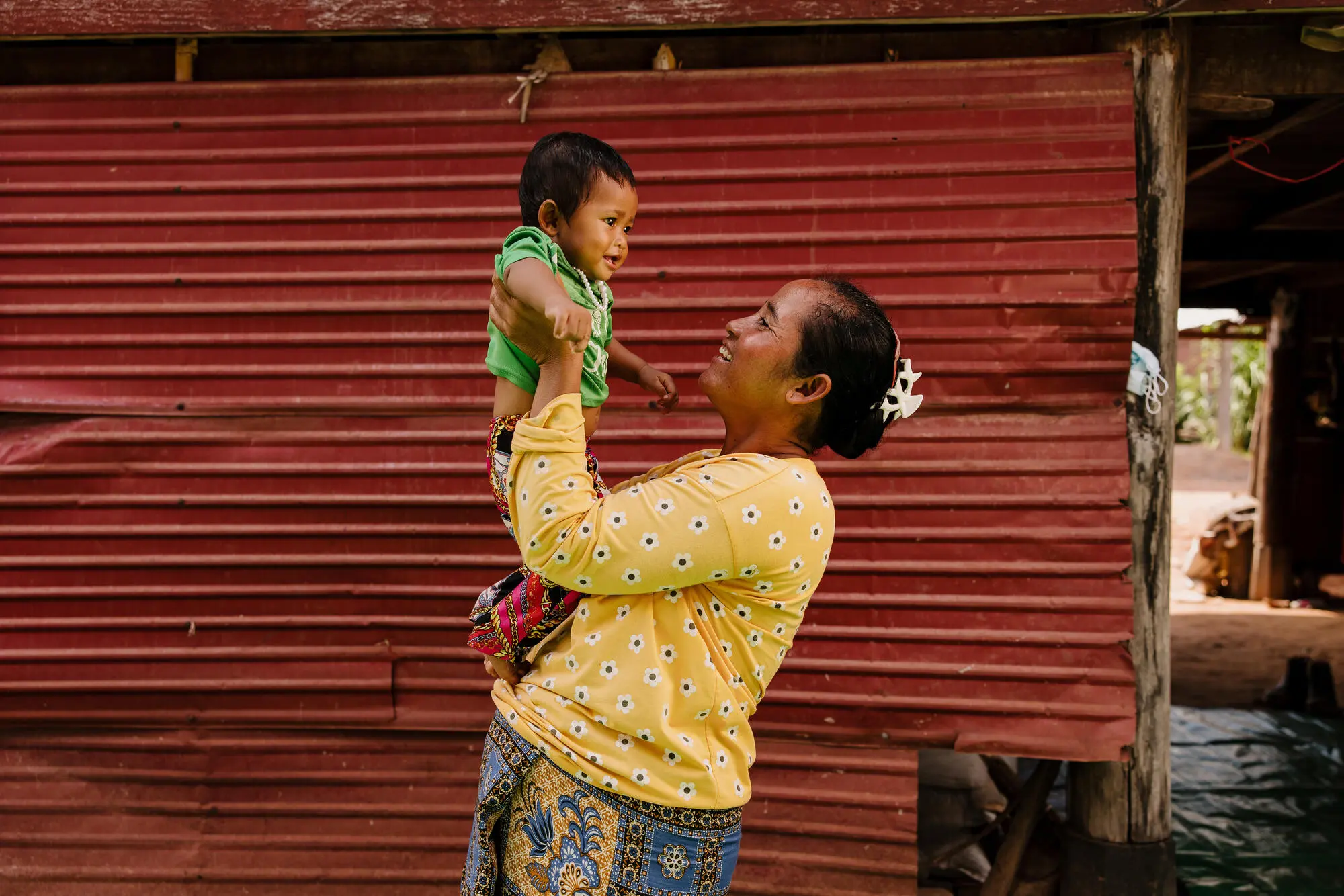
World Vision’s mission is to ensure every child experiences life in all its fullness — and that begins with the health and well-being of mothers and families. When mothers receive high-quality antenatal care, optimal childbirth services (including access to emergency care), and attentive postnatal care, their children are more likely to survive and thrive. In addition, children depend on caregivers having access to health promotion, disease prevention, and timely treatment of common childhood illnesses.
According to the World Health Organization, in 2023, over 700 women died each day from preventative causes related to pregnancy and childbirth — with approximately 92% of these deaths occurring in low- and middle-income countries. For every woman who dies, many more suffer long-term health consequences. The loss of a mother threatens her newborn’s survival, her children’s future, and the stability of the entire household.
World Vision designs and supports whole health systems programming to improve maternal, newborn, and child health, applying a continuum of care and life-cycle lens. Our strategies are grounded in globally recognized health principles: they are evidence-based, aligned with government health policies, and designed to be people-centered, equity-driven, gender-responsive, accessible to the most vulnerable populations, and sustainable and accountable over the long term.
World Vision’s MNCH programming is anchored in three strategic pillars:
Zambia: Survive to Thrive
The Survive to Thrive maternal and child health program is funded by private individual donors. Initially focused on Luwingu district in Zambia’s Northern Province, the program aimed to reduce morbidity and mortality for women of child-bearing age and children under five. Luwingu was selected due to its high child mortality and stunting rates, which are 8%–10% higher than the national average of 40%.
The program utilizes a two‐pronged approach: implementing proven preventive care interventions, including social and behavior change, and improving access to quality care and treatment. A key focus is providing piped water to points of care and enhancing sanitation and hygiene at local health facilities. Building on programmatic success and strong partner support, the initiative has expanded to provide clean water and healthcare improvements at every healthcare facility where World Vision works.
Key results to date:
Niger: Act 2 Save
The Act 2 Save project works to reduce high mortality rates of children under five across 18 communes in five regions of Niger. Funded by private individual donors, the project began in two regions and is now scaling across World Vision Niger area programs. In alignment with the government’s strategy, the project is helping address the leading contributors to child deaths — preventable infectious diseases such as malaria, diarrhea, and pneumonia.
About one-third of all deaths in children under 5 occur in the perinatal and infancy period, often due to neonatal sepsis, birth asphyxia, and congenital issues. With only two out of five deliveries taking place in health facilities, solutions are implemented both in communities and health facilities.
Key interventions include training and equipping community health workers (CHWs) to provide integrated community case management (iCCM) of childhood illnesses and strengthening healthcare facilities with improved water, sanitation, and hygiene infrastructure, training, and supportive environments for quality care.
Key results to date:
Check out this video for more on the Act 2 Save project
Uganda: Expanding Access to Immunization and Treatment
In partnership with The Pfizer Foundation, the Expanding Access to Immunization and Treatment program worked to reduce mortality among 85,743 children under five in Bugiri District. Launched in 2020, the project combined curative and preventive interventions to address childhood illnesses, improved demand and uptake of child health services at the community level, strengthened systems and structures, and enhanced the child health information and supply system.
Key results:
Rwanda: INGOBYI
The USAID-funded INGOBYI program (July 2018–May 2023) aimed to reduce infant and maternal mortality and the incidence of malaria by improving the availability of reproductive, maternal, newborn, and child health and malaria services with a focus on resilience and sustainability.
Covering 20 districts in Rwanda, the program’s key objectives included improving health-seeking behaviors, strengthening savings groups to improve financial access to health services, raising awareness of community-based health insurance, and empowering community members through local-level advocacy platforms.
Key results:
The International Food Policy Research Institute (IFPRI) spearheads the SPIR II learning agenda, including formative studies conducted during the first year of…
Adequate environmental conditions, comprising sufficient environmental hygiene items (e.g., gloves, soap, and disinfectant), adequate infrastructure (e.g., san…
This publication presents findings from a study in Armenia testing the integration of Early Childhood Development (ECD) into existing Maternal and Child Health…
