Research
Religious leaders play a key role in influencing the uptake of family planning (FP). This study, part of the Healthy Timing and Spacing of Pregnancies…
Faith & Dev
Health

World Vision’s family planning programs educate communities and partner with faith leaders to help reduce maternal and child health risks and empower women and families.
World Vision promotes healthy timing and spacing of pregnancies (HTSP) and raises awareness about the benefits of voluntary family planning. We integrate HTSP messages and services — including promotion of voluntary modern contraceptive methods — into our maternal and child health programming, in alignment with local government policies and guidelines. Community health workers and other health staff are equipped to educate and counsel women, adolescent girls, and their partners on contraception and the health benefits of preventing early pregnancy and spacing births.
To foster community support and address common misconceptions surrounding family planning, we engage faith and community leaders through our Channels of Hope model and other approaches. These leaders are equipped with accurate, culturally sensitive information on the value of family planning and modern contraception. In turn, they facilitate open dialogue within their congregations about maternal and child health services — including immunization, HTSP, contraceptive methods, and HIV and AIDS prevention — to support informed decision-making and improved health outcomes for women, children, and families.
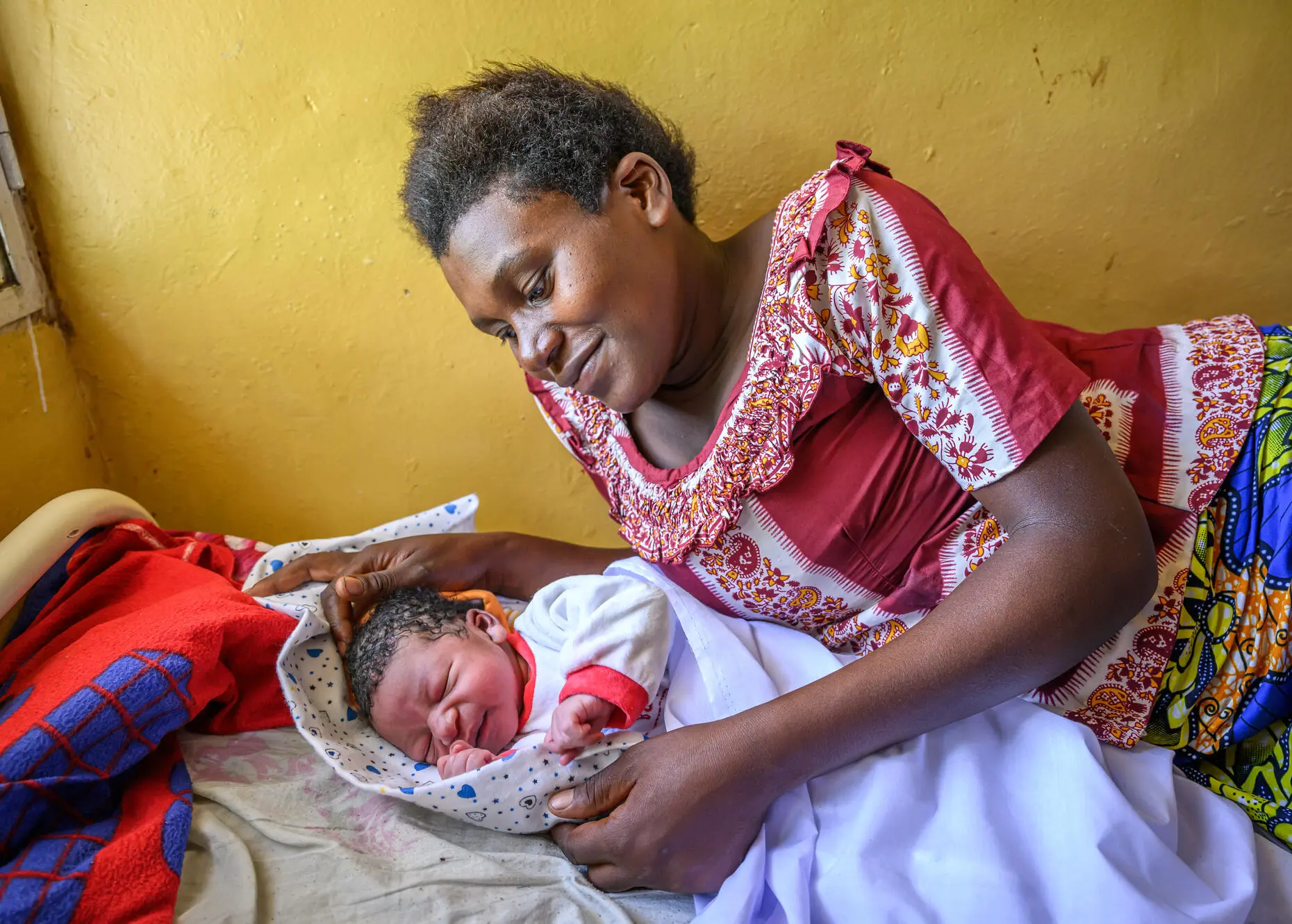
World Vision’s mission to enable children, families, and communities to reach their full potential cannot be fulfilled without addressing the root causes of inadequate pregnancy spacing — often tied to a lack of accurate information and access to contraception. Our work in voluntary family planning supports women to achieve healthy timing and spacing of pregnancies, giving them and their children the best chance at survival and thriving.
When pregnancies are delayed until after age 18, limited after age 35, and spaced at least two years apart, the risks of maternal and newborn complications drop significantly. For example, babies conceived 24 to 59 months after a previous birth have the lowest risk of dying in infancy. Adequate spacing also allows for extended breastfeeding and more time for mothers to care for each child, contributing to the child’s physical, cognitive, and emotional development.
Delaying first pregnancies until adulthood also increases the likelihood that young women can stay in school and pursue career opportunities, strengthening their families’ economic stability. On the other hand, early and closely spaced pregnancies — often the result of child marriage — are major drivers of infant and maternal mortality in many of the contexts where we work.
Family planning is not only a health issue. It intersects with nearly every area of life, including women’s economic empowerment, education access, food security, and child protection. For instance, children may be married off early or sent to work as a coping mechanism. Despite this, an estimated 164 million women of reproductive age have an unmet need for contraception, increasing the risk of unintended pregnancies and their associated health, social, and economic impacts.
Healthy timing and spacing of pregnancies through voluntary contraceptive services saves lives. It reduces neonatal, infant, and maternal mortality, prevents unintended pregnancies, prevents women and girls from seeking abortions, and helps families plan their futures. Regardless of when pregnancy occurs, World Vision is committed to supporting maternal and child survival — ensuring that women and their babies receive the care they need during pregnancy, birth, and beyond.
World Vision helps shift social norms around family planning by engaging communities at multiple levels — community, household, and individual.
At the community level, we partner with faith leaders through our Channels of Hope approach to promote family planning in ways that align with local theological and cultural values. These leaders play a vital role in reducing stigma, correcting misconceptions, and encouraging open dialogue about the benefits of healthy timing and spacing of pregnancies.
At the household and individual levels, family planning messages are integrated into maternal, newborn, and child health services. Through platforms like Nurturing Care Groups and timed and targeted counseling, women and their households receive accurate information, social support, and links to services that promote healthy behaviors — including voluntary use of modern contraception for HTSP.
Operations Research in Ghana and Kenya
World Vision conducted operations research on the Channels of Hope methodology in both Ghana and Kenya to assess its effectiveness in shifting faith leaders' support for HTSP. Findings showed that faith leaders’ knowledge of HTSP significantly improved after participating in CoH workshops. The largest increases in knowledge of family planning methods in intervention areas — compared to control areas — were seen with implants (+18.4 percentage points), injectables (+12.1), and pills (+11.2).
Kenya: Increasing Use of Family Planning and Immunization Services through Program Integration
In West Pokot and Isiolo counties, World Vision partnered with The Pfizer Foundation to implement the Increasing Use of Family Planning and Immunization Services through Program Integration project (2016-2019). The project aimed to boost uptake of family planning and immunization through integrated service delivery and community engagement strategies.
At the facility level, health providers were trained to offer family planning and immunization services during the same visit, in the same place — making it easier for families to get the care they need all at once.
At the community level, community health volunteers were trained to provide counseling on HTSP and family planning, and record updates on both family planning and immunization during their monthly household visits. Christian and Muslim faith leaders were engaged as community advocates to improve HTSP, immunization coverage, and male engagement. Community leaders were empowered to advocate for increased resources from the Ministry of Health.
Key results:
Achieved statistically significant increases in immunization coverage:
This project contributed to a growing evidence base and has been featured in several peer-reviewed journal articles, including:
Religious leaders play a key role in influencing the uptake of family planning (FP). This study, part of the Healthy Timing and Spacing of Pregnancies…
This study evaluates the impact of World Vision's Channels of Hope (CoH) methodology on promoting healthy timing and spacing of pregnancies (HTSP) and family p…
This study examined client and provider perceptions of integrated family planning (FP) and childhood immunization services in Kenya and Uganda. It found that r…
