
WASHINGTON, D.C., April 23, 2026 — World Book Day is a global moment to celebrate the power of books to transform lives. But for millions of children around the world, books alone are not enough. Learning improves when books are accessible, usable, and embedded within strong education systems that support teachers, reach marginalized learners, and meet children where they are.
At World Vision, literacy is not approached as a single input or a one-time distribution. Instead, learning materials are part of a holistic, systems-focused strategy designed to help children build foundational skills and sustain progress long after programs end.
What “accessible books” really means
Access to books goes far beyond physical availability. For learning materials to make a meaningful difference, they must reflect the languages children use (including sign languages), the classroom realities teachers face, and the diverse learning needs of students, including children with disabilities.
Evidence from global education research consistently shows that learning materials are most effective when aligned with teacher practice, reinforced through training, and supported by education systems that ensure sustained use. This means integrating books and digital tools into daily instruction, using formats that work in low-resource settings, and equipping teachers and families to actively support learning.
Education partners increasingly recognize that impact depends not on books alone, but on how learning materials are designed, delivered, and used within real classrooms.
Advancing inclusive literacy through the All Children Reading Grand Challenge
Expanding access to reading materials — especially for children who have historically been excluded — requires intentional design, innovation, and strong evidence. Through its leadership in the All Children Reading: A Grand Challenge for Development (ACR GCD), World Vision helped advance global literacy by supporting the development and testing of reading materials tailored to children’s real learning environments.
Over a 12-year partnership with the U.S. and Australian Governments, World Vision served as Challenge Fund Manager, catalyzing the creation of accessible, locally relevant reading and literacy materials designed for use in low-resource settings. These materials went beyond traditional textbooks to include digital and print solutions that addressed barriers related to language, disability, and access.

The initiative supported innovations that:
- Produced high-quality reading materials in underserved and local languages, enabling children to learn to read in the language they speak at home.
- Piloted evidence-based ed-tech tools that accelerate early reading, such as Feed the Monster, a game-based literacy application that helps children develop reading fluency through playful, self-directed in learning low-resource settings.
- Expanded born-accessible and adaptive formats for children with disabilities, including braille, large print, sign-language-enabled storybooks, and audio-supported digital text.
- Strengthened open-source digital libraries, such as Bloom and the Global Digital Library, increasing the availability of free, accessible reading content for schools, families, and education systems.
- Developed and adapted early grade reading assessments to measure whether children are acquiring core literacy skills, designed to be accessible for children who are blind, have low vision, are deaf, or are hard of hearing—helping ensure learning progress could be measured inclusively.
Through three rounds of global competitions, ACR GCD received more than 1,200 applications and awarded 94 grants — nearly half to organizations based in developing countries — supporting innovators from NGOs, universities, startups, and organizations of persons with disabilities. Collectively, these efforts contributed to solutions that reached more than 3.3 million learners, demonstrating how accessible learning materials, when paired with strong systems, can improve foundational literacy outcomes at scale.
Beyond individual tools, ACR GCD helped shape global approaches to foundational literacy by demonstrating that literacy gains are strongest when learning materials are locally produced, inclusive by design, openly accessible, and embedded within education systems that support teachers, assessment, and scale-up — a model increasingly reflected in donor strategies and government education planning worldwide.
From evidence to impact: EPIC Zambia Literacy
Through the EPIC Zambia Literacy Project, World Vision is demonstrating how research and innovation developed through initiatives like ACR GCD can be translated into measurable results when digital learning materials are used to support teachers in classrooms, facilitators in reading clubs, and caregivers in homes.
Only one in three Zambian children can read at the expected level by the end of primary school. Children who do not learn to read by third grade are significantly more likely to drop out of school, miss key milestones, and experience poverty later in life. Girls and children with disabilities face even higher risks.
To address this challenge, World Vision partnered with the N50 Alliance, Mwabu, and Zambia’s Ministry of Education to pilot technology‑enabled literacy and numeracy approaches in primary schools serving grades 1 to 7.
During the project’s first year:
- 3,609 learners — 1,811 boys and 1,798 girls — benefited from the use of digital learning materials in classrooms.
- Reading comprehension among Grade 3 students increased to an average of 44%, with some schools reaching as high as 75%.
- Four out of five pilot schools reported improvements in student and teacher attendance.
- Four out of five schools recorded gains in Grade 7 examination performance.
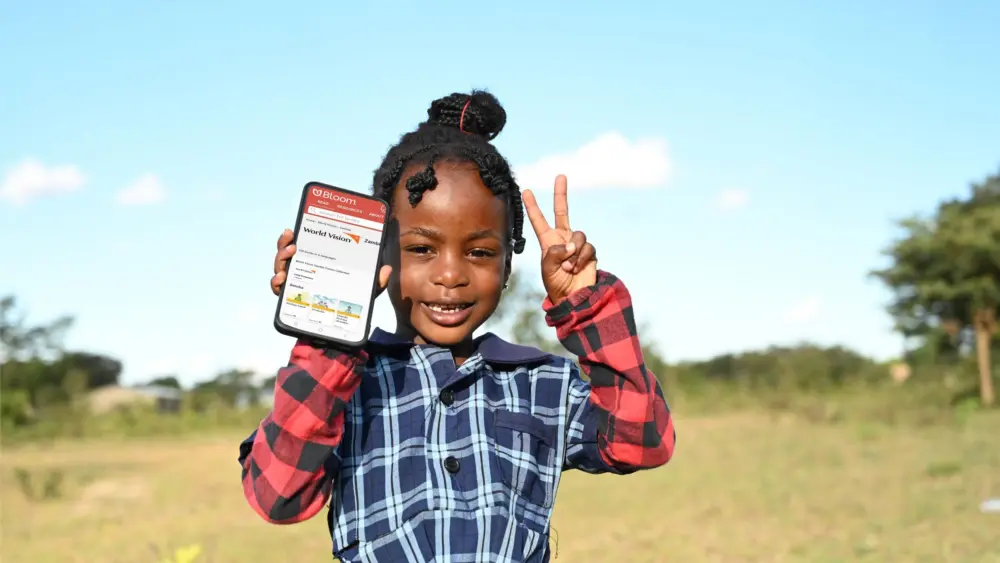
- The Bloom Library expanded to 140 digital books, available in Zambian languages, English, and sign language.
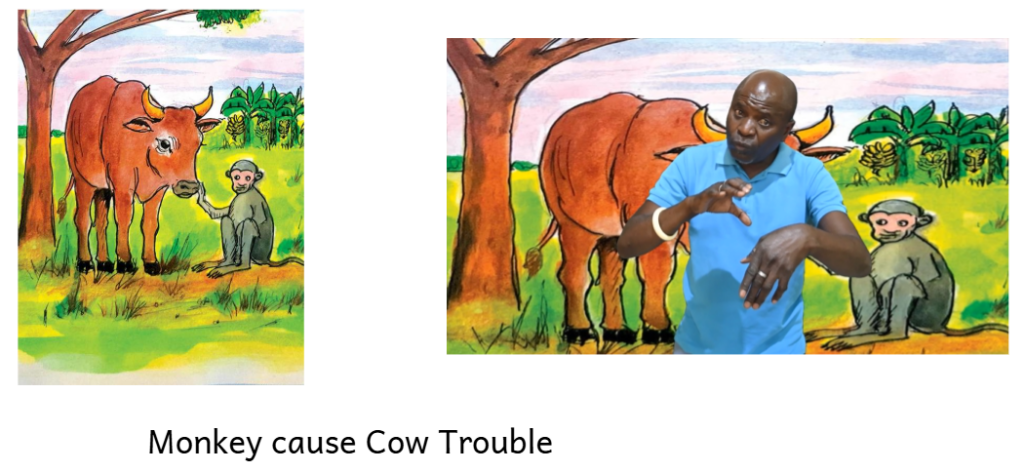
Find this book and more at Bloom Library here!
Teachers use smartphones connected to projectors to deliver curriculum-aligned digital content, creating more interactive classrooms that promote participation, peer collaboration, and critical thinking. As one Grade 7 student shared, “The EPIC program made learning easy for me. I was able to understand many topics with the help of videos and e-books used during lessons — it made learning fun and easy.”
The project also surfaced important lessons. Where attendance declined, challenges such as long travel distances and the loss of school feeding programs highlighted the need for integrated education and social support systems.
Building on year one learning, EPIC is expanding to three additional schools, including St. Mulumba School for the Deaf, with tailored digital approaches and continued emphasis on teacher training, community literacy support through reading clubs and low-cost high efficiency computer labs, caregiver engagement, and inclusive design. Early implementation has already revealed important gains: teachers were trained to use the Bloom Library to structure lessons for children with hearing impairments, strengthening visual learning and vocabulary development; teachers across pilot schools reported strong uptake of the smartphone-and-projector model; and in Pemba, Bloom Library resources are also being used to support adult literacy, extending the project’s reach.
Why access and systems matter
Books are foundational — but books alone do not improve learning unless children can meaningfully use them. When materials are poorly aligned with language, learning needs, or classroom practice, impact remains limited even if distribution targets are met.
World Vision’s approach prioritizes access by ensuring learning materials:
- Reach children in forms they can understand and use
- Are embedded in classrooms through teacher support
- Include children with disabilities and marginalized learners
- Are sustained through partnerships with national and local education systems
By shifting from counting books delivered to measuring whether learning reaches every child, World Vision helps ministries of education, educators, humanitarian actors, and communities move beyond short-term fixes toward durable education systems that deliver results long after programs close.
Books can change lives — but only when they are accessible, inclusive, and part of education systems designed to help every child learn.

Learn more
