
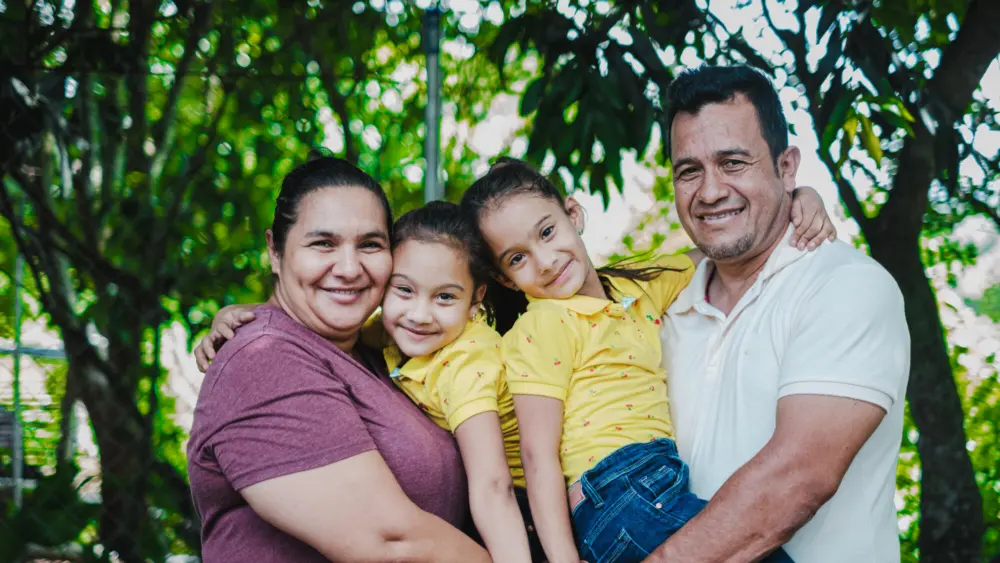
Washington, D.C., May 15, 2026 — As governments and development partners mark International Day of Families, this year’s theme — Families, inequalities, and child well-being — offers a timely reminder: children’s outcomes are closely tied to the conditions in which their families live.
For governments and organizations focused on child-centered development and long-term human capital, strengthening families is a strategic investment. Inequality influences families’ access to services, income security, and safe environments, with direct consequences for child well-being. When families receive adequate support, children are more likely to survive, develop, learn, and thrive.
Child well-being begins with strong, supported families
World Vision is a child-focused organization that works through families, not around them. Across contexts, evidence and experience point to a consistent finding: children experience stronger protection, care, and developmental outcomes when families have the tools, services, and stability needed to meet their needs.
Families provide the primary environment for child development, particularly in the early years. From pregnancy through early childhood, caregiving quality, nutrition, stimulation, and protection shape lifelong health, learning, and resilience. Public systems that support families strengthen the conditions that enable children to thrive.
What family strengthening looks like in practice
Health, nutrition, and the first 1,000 days
The period from pregnancy through a child’s second birthday — the first 1,000 days — shapes survival and long term development. World Vision’s maternal, newborn, and child health and nutrition efforts focus on prevention, early care-seeking, and caregiver support to reduce avoidable risks during this critical window.
Programming that takes this holistic approach strengthens families’ access to health services and supports protective practices, improving outcomes for children and caregivers while reducing future pressure on health and education systems.
Early childhood development and nurturing care
Strong families enable nurturing care — responsive caregiving, early learning, safety, and adequate nutrition — during the years when brain development accelerates most rapidly.
World Vision’s Nurturing Care Group (NCG) Core Project Model, implemented in more than 28 countries, supports caregivers through practical, community-based approaches across health, nutrition, WASH, education, and protection.
Evidence shows that caregivers participating in NCG programs increase early learning activities such as reading, singing, and play, and adopt more responsive feeding practices. Programs also improve household sanitation and reduce harmful behaviors toward children. The model functions effectively in both stable and fragile settings and remains highly cost-efficient — often costing less than $3 per participant per year — making it suitable for scale within public systems.
Global evidence affirms that every child has the right to nurturing care and quality early childhood care and education (ECCE) from birth through age 8. Yet nearly 60% of children in low income countries lack access to early care and learning opportunities, with the highest exclusion rates found in sub Saharan Africa, Northern Africa, and Western Asia. These gaps deepen inequality early, often before children enter school, when development remains most responsive to intervention. Investment in family-based nurturing care and inclusive ECCE advances both children’s rights and long-term returns.
Positive parenting, protection, and violence prevention
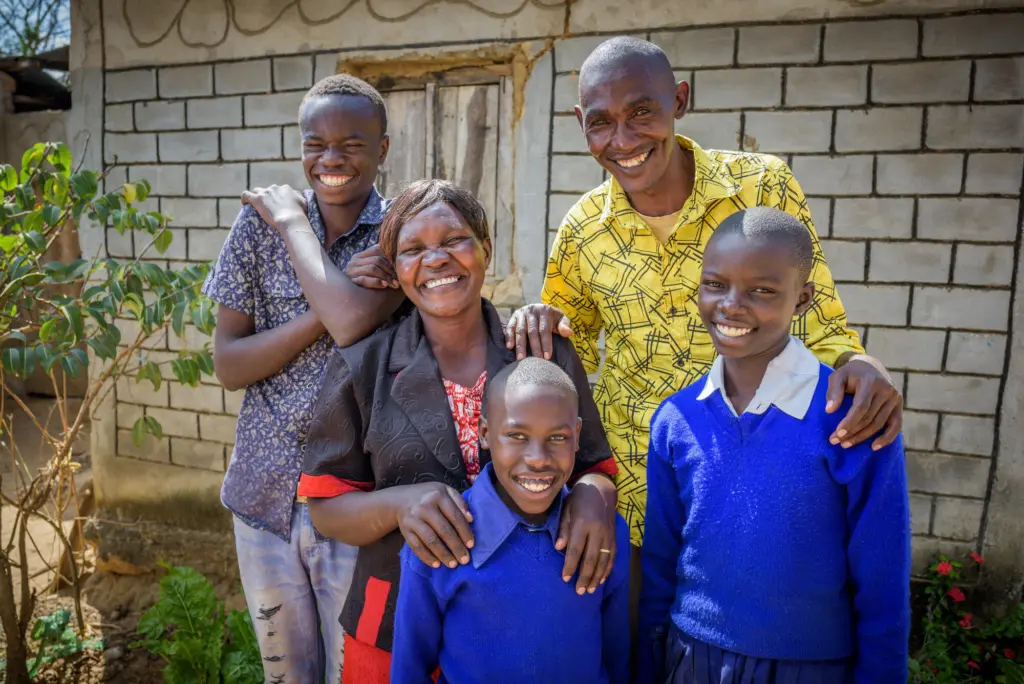
Safe and nurturing family environments form the foundation of child protection and family preservation. World Vision’s Celebrating Families model addresses harmful norms that place children at risk by working with caregivers and community leaders to strengthen positive relationships and nonviolent parenting practices.
Developed for faith based contexts and adapted for multi faith and non religious settings, Celebrating Families integrates with child protection, education, and livelihoods programming. A twelve-country study conducted with Fuller Theological Seminary documented substantial reductions in violent discipline and sustained improvements in caregiver child relationships. Participating parents reported a 47% reduction in hitting children as punishment, underscoring how shifts in norms can prevent violence and keep families together.
Strengthening household resilience
Families’ ability to care for children depends on economic stability and their capacity to withstand shocks. However, resilience is not just about having access to material or economic assets and opportunities but also an empowered mindset. World Vision is increasingly integrating approaches like Empowered Worldview (EWV) and Savings for Transformation (S4T) to strengthen both the mindsets (psychological preparedness) and financial foundations that support resilience and wellbeing of children and families.
EWV catalyzes hope, faith, community relationship, and cohesion, which are essential for families’ ability to respond to stress and shocks. Evidence shows that mindset empowerment attributes such as hopefulness and identity, as well as social relationships, including spouses working together, and social cohesion improve households’ ability to manage risk and sustain investments in children. S4T complements these changes by expanding households’ social networks and offering opportunities to save or borrow small amounts of money through the group to respond to emergencies or investment in children’s wellbeing. Together, these approaches holistically strengthen household resilience in ways that benefit children directly.
Why government investment matters
Community-based programs help demonstrate what works for children and families. Achieving results at scale, however, depends on government investment, policies, and systems that sustain impact over time. Donors and NGOs play an important role in partnering with governments to increase investments in and rollout of national interventions that support child and family well-being over the long term. Without predictable public financing, adequately resourced services, and institutional accountability, gains remain fragile and vulnerable to disruption.
Government investment matters because families rely on public systems — health, nutrition, early childhood education, social protection, and child protection — to support children consistently, especially during periods of economic stress, conflict, or climate-related shocks. These systems help reduce inequality by extending essential services to families who would otherwise lack access.
Evidence also consistently shows that investing in children yields significant long-term benefits. World Vision studies show that each additional year of education increases individual income by 10% and contributes to national GDP growth. Early childhood health and nutrition programs can reduce future public costs by improving productivity and lowering rates of crime and welfare dependency. Embedding child-centered priorities within government investment strategies is therefore not only a social imperative, but also a forward-looking economic strategy that strengthens societal stability and resilience.
World Vision works alongside governments to strengthen these national and local systems, aligning community-level approaches with public priorities and service delivery. This includes supporting policy implementation, building local capacity, generating evidence to inform decision making, and linking families to government services. Partnerships focus on complementing government leadership rather than substituting for it, with the goal of improving service quality, reach, and accountability for children.
In the United States, this commitment aligns with legislative efforts such as the THRIVE Act, which emphasizes reducing poverty and instability through approaches that support family unity and improve outcomes for children. Internationally, similar priorities appear in government strategies that center early childhood development, social protection, and violence prevention as foundations for long-term development.
Sustained government investment enables family-focused approaches to move from pilot efforts to population-level impact, ensuring that policies translate into improved care, protection, and opportunity for children.

A policy moment for families and children
Policy dialogue increasingly links inequality, social protection, early childhood investment, and long term development outcomes. Evidence from neuroscience, economics, and education shows that early, family-centered investments improve health, learning, and future productivity.
Despite this evidence, funding for early childhood development and family support remains limited, even as conflict, displacement, and climate shocks intensify pressure on households. This gap underscores the need to strengthen the family and community ecosystem around young children — particularly the most vulnerable — to improve care, protection, development, and education outcomes.
Centering families to advance child well-being
International Day of Families reinforces a clear conclusion: addressing inequality requires ensuring families have what they need to care for children. When families receive sustained support, children build stronger foundations for health, learning, and resilience.
For governments and partners, the evidence points to a practical path forward: invest in families, strengthen public systems, and anchor policy decisions in child well-being. These commitments support children today and contribute to more resilient societies in the future.
