
By Shimali Senanayake, World Vision U.S., with contributions from the ANGEL Angola team
From warehouses storing U.S.-provided commodities to school kitchens serving warm porridge before classes begin, a recent visit by the United States Department of Agriculture (USDA) offered a firsthand look at how the USDA McGovern-Dole International Food for Education and Child Nutrition project, the ANGEL program, is supporting children’s learning and well-being in Angola.
The visit focused on Angola Nutrition for Growth, Education and Learning (ANGEL), a five-year initiative funded through USDA’s McGovern-Dole International Food for Education and Child Nutrition Program. Implemented by World Vision in partnership with the Government of Angola and local stakeholders, the program supports school feeding, literacy, nutrition, and safer learning environments across Benguela, Huíla, and Cunene provinces.
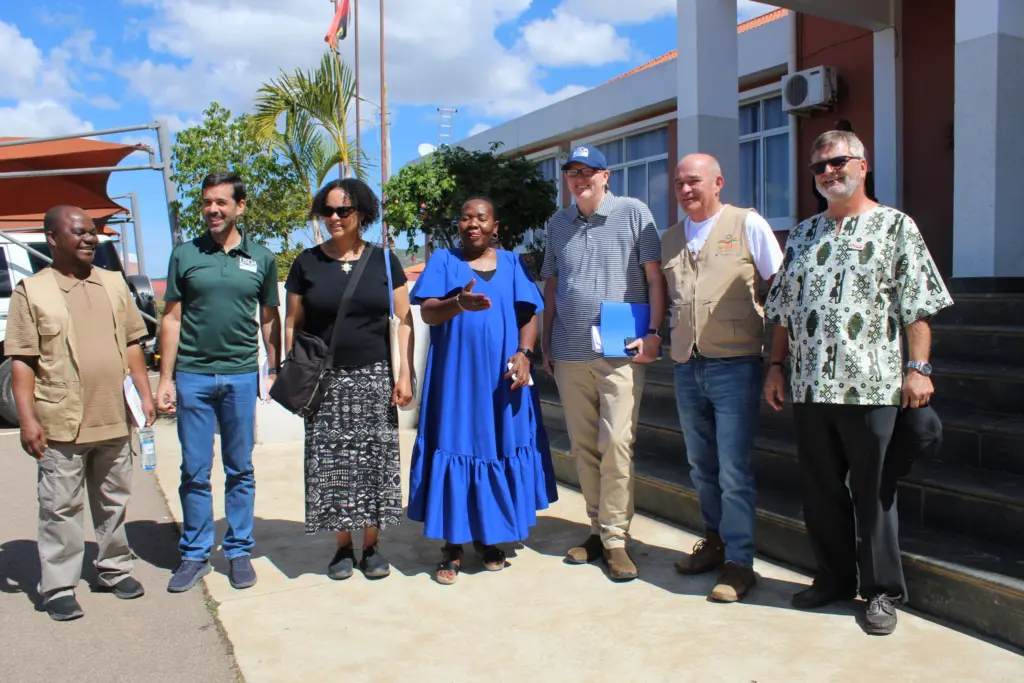
Over the course of the visit, the delegation met with national and local authorities, school communities, implementing partners, and program participants. They visited warehouses, schools, kitchens, and classrooms, gaining a closer look at the systems and partnerships that help move food from port to plate.
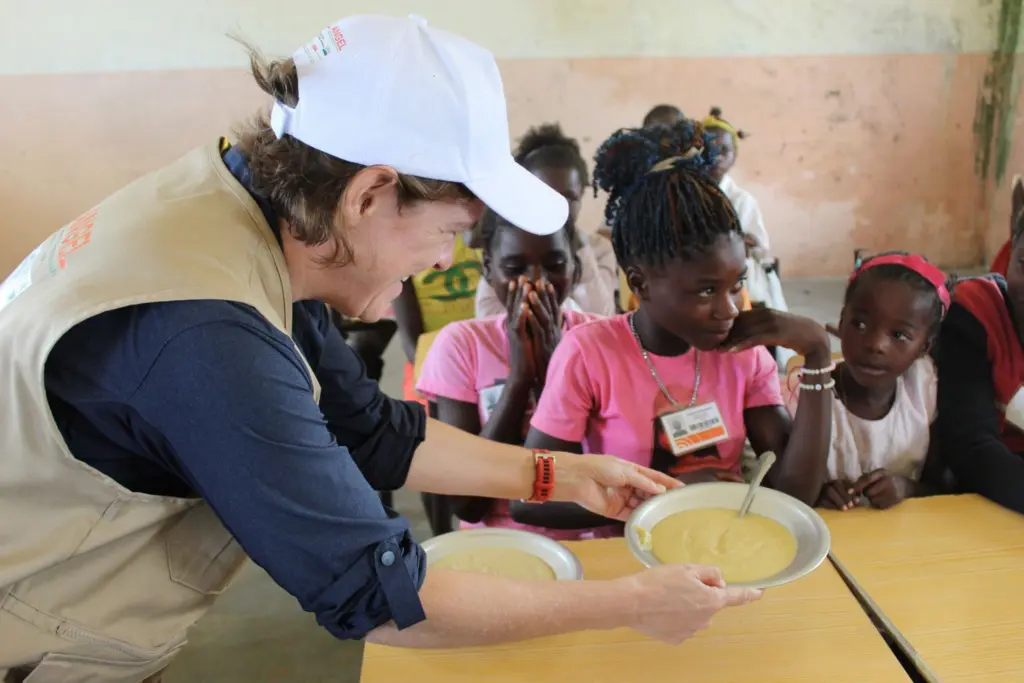
Across the six schools visited, the delegation observed the school feeding process in action — from U.S.-provided commodities, including fortified grain and vegetable oil stored in school warehouses, to cooks preparing warm porridge in program-supported kitchens before the start of classes. As children gathered with bowls in hand, teachers and school leaders shared how regular school meals are helping improve attendance, concentration, and classroom participation, while creating a more supportive environment for learning.
“Since the ANGEL program started at our school, we have seen improved attendance, and students are more attentive in class,” said the principal of Tchipa Primary School in Chibia, Huíla Province, during the visit.
The delegation also observed education activities implemented in partnership with Development Aid from People to People (ADPP), including reading clubs and child-centered learning approaches that support literacy and classroom engagement. In several classrooms, students read aloud from textbooks in small groups while teachers demonstrated participatory learning activities designed to strengthen reading skills and build confidence among young learners.
Beyond the classroom, the delegation observed community reporting boxes installed in schools to strengthen transparency, accountability, and child protection. At several sites, newly improved water points and sanitation facilities reflected the program’s broader focus on creating safer and healthier learning environments for children.
For World Vision and its partners, the visit was an important opportunity to reflect on progress, strengthen partnerships, and share lessons learned from the field. Through continued collaboration, ANGEL is helping build stronger school communities and brighter futures for children across Angola.
Photo captions
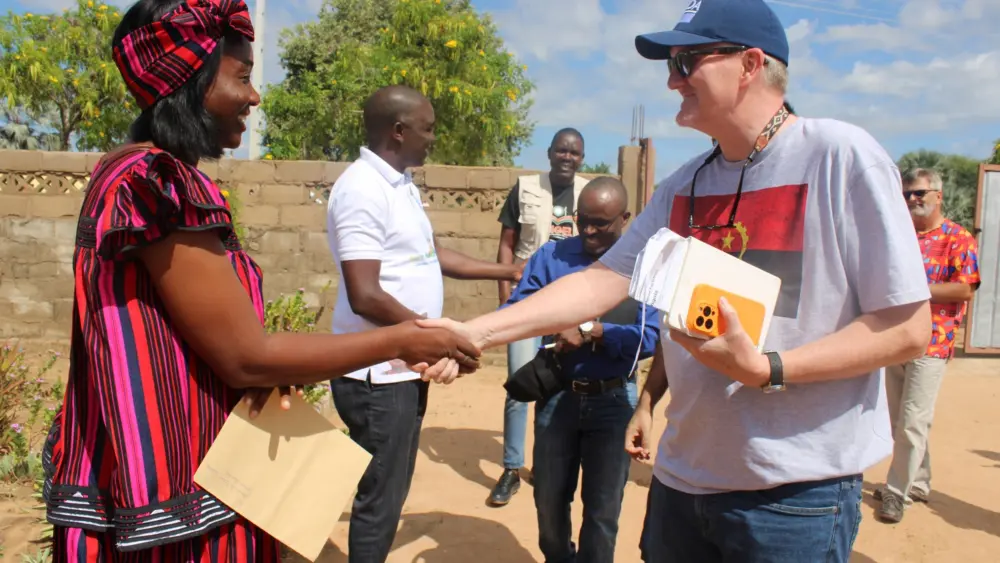
- Paul Alberghine, Senior International Program Specialist and lead representative for the ANGEL McGovern-Dole grant, meets with a primary school principal.
- Members of the ANGEL project team, including representatives from the USDA Foreign Agricultural Service (FAS), the Government of Angola, the U.S. Mission in Pretoria, and World Vision.
- Dawn Goodwin, National Director of World Vision Angola, serves fortified porridge to students participating in the school feeding program.
About ANGEL
The Angola Nutrition for Growth, Education and Learning (ANGEL) program is a five-year initiative funded by the U.S. Department of Agriculture (USDA) through the McGovern-Dole International Food for Education and Child Nutrition Program and utilizing U.S.-provided agricultural commodities. Implemented by World Vision in partnership with the Government of Angola and local stakeholders, the program aims to support more than 80,000 participants across 82 schools in Benguela, Huíla, and Cunene provinces through integrated school feeding, literacy, nutrition, WASH, and community resilience interventions designed to improve education and well-being for vulnerable children and families.
