
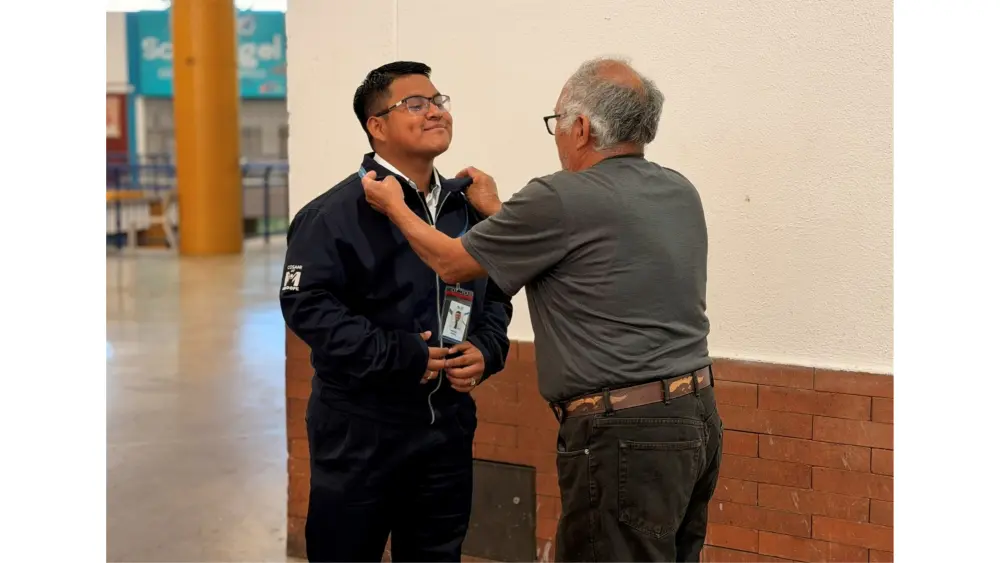
Across El Salvador, Guatemala, and Honduras, World Vision’s RISE initiative — Reaching Independence through Support and Empowerment — is helping young people stay engaged in education, find employment, launch businesses, and build pathways toward productive adulthood.
Our experience reinforces an important lesson: the journey from education to opportunity is rarely straightforward.
Young people need more than classroom learning to navigate the transition to adulthood. They also need confidence, practical skills, and people around them who can help open doors. When those elements come together, education becomes part of a broader pathway to employment, entrepreneurship, tertiary education, leadership, and meaningful participation in community life, rather than a finish line with nothing beyond it.
Supporting the whole journey
World Vision’s RISE project helps young people ages 12 to 29 make that transition.
It works through two connected approaches. Teens Ready keeps adolescents engaged in learning and helps them build motivation, identity, and a sense of purpose. Youth Ready prepares older youth for work, entrepreneurship, and further study, then connects them to actual opportunities.
The numbers give a sense of the reach. In 2024 and 2025, more than 6,100 adolescents finished Teens Ready and more than 4,400 young people completed Youth Ready. Of those, over 900 stayed in or returned to school, 570 found jobs, 590 launched businesses, and 240 moved into internships or work practicums.
Young people who lack educational, economic, and social support opportunities often face greater risks of exclusion, exploitation, and other harmful outcomes. Creating safe, supported transitions to adulthood is both an economic and protection priority.
The impact goes beyond numbers. Young people do better when safe learning, personal growth, and economic opportunity reinforce one another. RISE participants speak of the transformation that occurs in their mindset and view of the future. Cristian of Honduras says, “The RISE project didn’t just give me tools; it gave me back my dignity, my hope, and the desire to live a different life.”
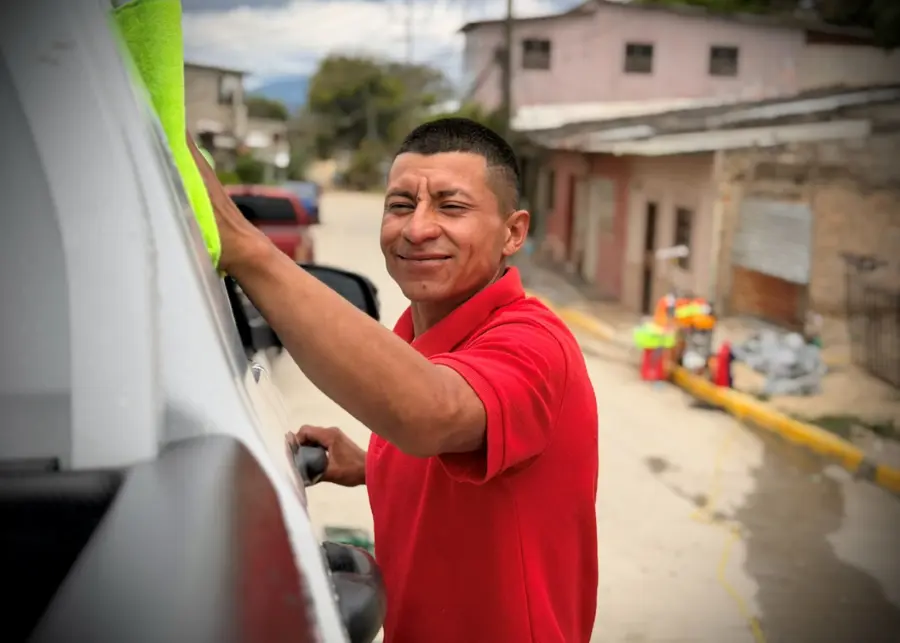
Cristian operates his mobile car-wash business after completing Youth Ready, a journey he says restored his confidence, hope, and sense of purpose
Confidence is a workforce skill
Technical skills matter, but they are only part of what young people need to succeed.
Skills like communication, teamwork, resilience, and problem-solving help young people navigate classrooms, workplaces, and relationships. They also give young people the confidence to pursue opportunities and shape their futures. Employers notice these qualities as much as any certificate.
Through Youth Ready, one young man in Guatemala worked through sessions on self-discovery and first-job preparation, learning to name his strengths, write a résumé, and demonstrate why he is the most qualified candidate. The program pointed him toward openings shared through its networks, and he landed an internship at a local cooperative, COSAMI. That internship became his first formal job. He describes the shift plainly: he went from a young man full of fear to someone who believes in what he can do.
A participant in El Salvador tells a similar story. She expected tutoring and received much more: leadership practice, teamwork, and the confidence to speak up and lead a group. She stayed in school and found university easier to manage as a result.
Opportunity depends on connection
Young people cannot build these pathways alone.
Families, schools, employers, community organizations, faith leaders, financial institutions, and government agencies all influence whether young people can remain in education, obtain practical experience, find safe employment, or pursue entrepreneurship.
RISE brings these players to the same table instead of treating education, jobs, and leadership as separate problems. It strengthens youth-led and youth-serving organizations across government, business, and faith communities and links them to partners such as local financial institutions.
This focus on connected support systems is a defining feature of World Vision’s approach. Training prepares a young person for an opportunity. Partnerships help make sure the opportunity is there in the first place.
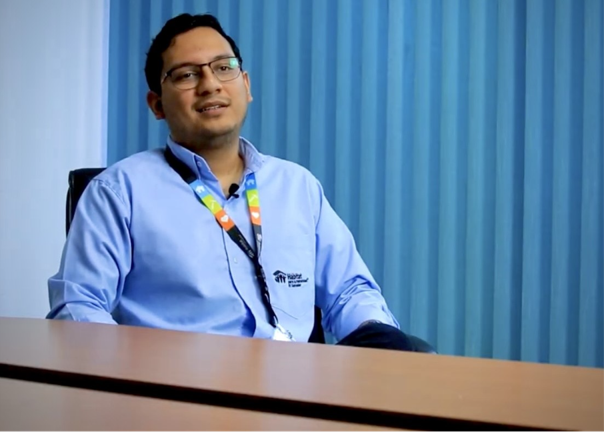
Employer partners play a key role in helping young people move from preparation to opportunity. Diego shares his experience working with RISE graduates
Employers as partners in youth development
RISE currently works with more than 126 companies that provide internships, mentorship, and employment opportunities for young people.
Through internships, job fairs, and hiring, businesses show young people what work actually asks of them. They also keep training relevant by identifying the skills their local labor market needs. Their perspectives provide important evidence of the value young people bring.
In El Salvador, a human resources coordinator at Habitat for Humanity described RISE graduates as proactive, responsible, and ready to learn, singling out one hire, Helen, who stood out from her first interview. He put it bluntly: technical skills can be taught, but the ability to fit a team and adapt is harder to find, and these young people already had it.
In Honduras, a national coordinator working with employers made the business case directly. Young people trained through Youth Ready arrived with leadership, communication, and customer-service skills, moved from operational roles into administrative ones, and demonstrated that hiring them created both social and business value.
The exchange runs both ways. Young people get a first job and a foothold. Employers get motivated recruits who can grow with them.
Building systems that last
RISE is built to outlast itself.
Alongside its work with individuals, the project strengthens the organizations and institutions that young people rely on because progress that depends on a single project will not survive the project’s end. RISE therefore invests in the wider network: government bodies, employers, faith-based and financial institutions, and youth-serving groups that can keep the work going.
Young people become part of that network too. In Quetzaltenango, 21 young leaders trained and certified to teach the Youth Ready methodology in their own communities. One participant went from receiving support to serving as a RISE Agent of Change, coaching others through the same steps he once took.
Invest in one young person, and the return reaches their peers, families, and the organizations around them.
Ángel prepares for a skilled trade, building the experience and confidence needed to pursue future opportunities.
A proven foundation for a changing future
A few lessons stand out.
Young people gain the most when education comes packaged with life skills, mentorship, and a real chance to earn a living. Employers reward interpersonal and adaptive skills as much as technical ones. And nothing lasts without local partners who stay long after the funding does.
These lessons are becoming even more important as communities seek sustainable ways to help young people learn, earn, and lead.
That last lesson is the one that compounds. When a young person in Guatemala trains the next cohort, when an employer in Honduras rethinks how it hires, and when a local organization keeps a program running on its own, the work stops belonging to a single project and starts belonging to the community. That is what durable change looks like: not a program that ends, but a capacity that stays.
RISE is building that capacity now, one young person, one employer, and one institution at a time. The result is a foundation Central America’s next generation can stand on and, in time, extend to those who come after them.