Faith & Community Initiative (FCI)
Working alongside governments, faith-based organizations, and communities to expand access to quality healthcare and build sustainable, locally led health systems across 17 countries.
Highlights
Reach at scale
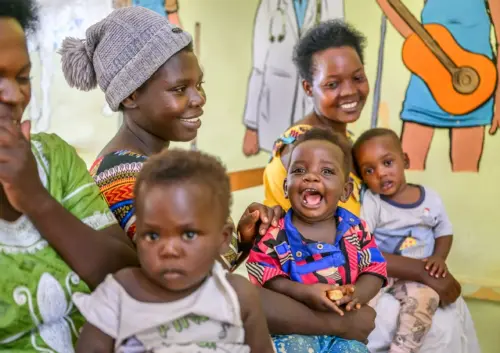
Estimated to reach 22 million people annually through direct health services and health education delivered through faith-based and community health networks.
Strengthening frontline care
The initiative will train and equip 30,000 community health workers and connect 2,500+ community sites through strengthened referral systems.
Built for lasting impact
Working across 17 countries, FCI strengthens local health systems and supports the transition of leadership to governments, faith-based organizations, and community institutions.
Strengthening community health systems through faith-based and government partnerships
The Faith & Community Initiative (FCI) is a five-year, multi-country effort supported by a $250 million award from the U.S. Department of State’s Bureau of Global Health Security and Diplomacy. FCI works alongside governments, faith-based organizations, healthcare providers, and communities to improve access to integrated health services. Through a proven hub-and-spoke approach, the initiative strengthens local health systems, expands access to care, and supports a long-term transition to local leadership.
The Faith & Community Initiative is a first-of-its-kind consortium bringing together faith-based and humanitarian organizations to strengthen integrated health services and support long-term local leadership of those services. The initiative focuses on HIV, tuberculosis, malaria, maternal and child health, nutrition, and related community health priorities.
FCI invests in and strengthens faith-based health networks that already provide essential healthcare services in underserved communities. By working through trusted local systems and partnerships, the initiative helps extend access to quality care while building long-term sustainability and local ownership. The initiative is coordinated with local governments and community groups and serves all people based on need.
- Expand access to high-quality integrated health services.
- Protect mothers and vulnerable children from infectious disease.
- Train and equip 30,000 community health workers.
- Connect more than 2,500 community sites through referral systems.
- Transition leadership of health services to local systems and leaders.
- Mobilize communities and partnerships to sustain progress beyond the life of the initiative.
- Prioritize vulnerable populations, including people living with HIV, pregnant and breastfeeding women, adolescent girls, and underserved communities facing barriers to healthcare.
The Faith & Community Initiative works alongside governments, faith-based organizations, healthcare providers, and communities to strengthen national and local health systems and improve access to quality healthcare. Through integrated approaches, the initiative supports:
- Integrated service delivery
- Laboratory system strengthening
- Health workforce development
- Supply chain improvements
- Digital health and data systems
- Technical assistance and mentorship
- Country ownership and sustainability efforts
A key focus of the initiative is supporting and equipping approximately 30,000 community health workers. These frontline providers help extend essential health services to underserved communities and serve as a critical link between households and the formal healthcare system. The initiative will strengthen training, supervision, and support systems while aligning efforts with national government priorities.
From the outset, FCI is designed with long-term sustainability in mind. Working with governments, healthcare providers, faith networks, and community organizations, the initiative will strengthen local capacity and support the gradual transition of leadership, management, and service delivery to local institutions and stakeholders. Through coordination with local governments and community partners, FCI helps build locally led health systems that can sustain progress beyond the life of the initiative.
At the center of the model is a hospital or larger health facility that serves as a "hub." The hub provides training, supervision, referrals, supplies, and technical support to a network of community clinics and health posts known as "spokes."
This system improves service quality, strengthens referral pathways, and helps ensure people in remote communities can access consistent healthcare services.
Consortium partners
The Faith & Community Initiative brings together organizations with complementary expertise in global health, health systems strengthening, community engagement, and sustainable development. Led by World Vision, the consortium includes ADRA International, Catholic Relief Services, Compassion International, HOPE Worldwide, International Care Ministries, LifeNet International, and World Relief.
Together, consortium partners work alongside governments, healthcare providers, faith leaders, and communities to expand access to quality healthcare, strengthen locally led health systems, and support sustainable health services in underserved communities.