
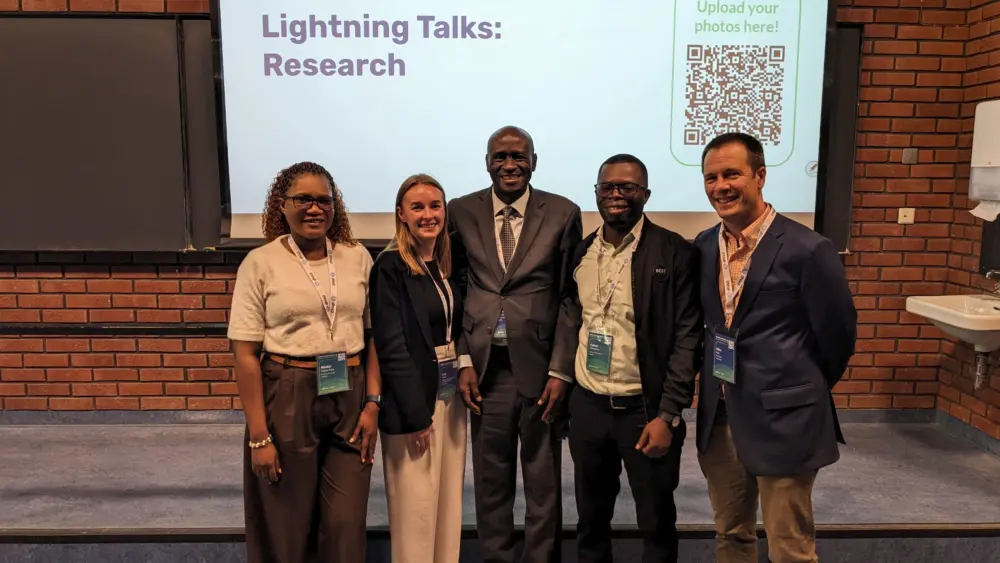
World Vision is participating in the DHIS2 Annual Conference, a leading global gathering of health system practitioners, governments, donors, and implementing organizations working to strengthen data-driven decision-making in health and nutrition programs. This year, over 350 in-person attendees — representing 65 countries, 121 organizations, and 27 ministries of health — are participating in the conference.
DHIS2 is a core platform used across global health systems, and this conference offers an opportunity to share field experiences, learn from peer organizations and governments, and advance best practices in digital health, data analytics, and system integration. World Vision’s participation reflects our commitment to using data to drive better health outcomes in the communities we serve.
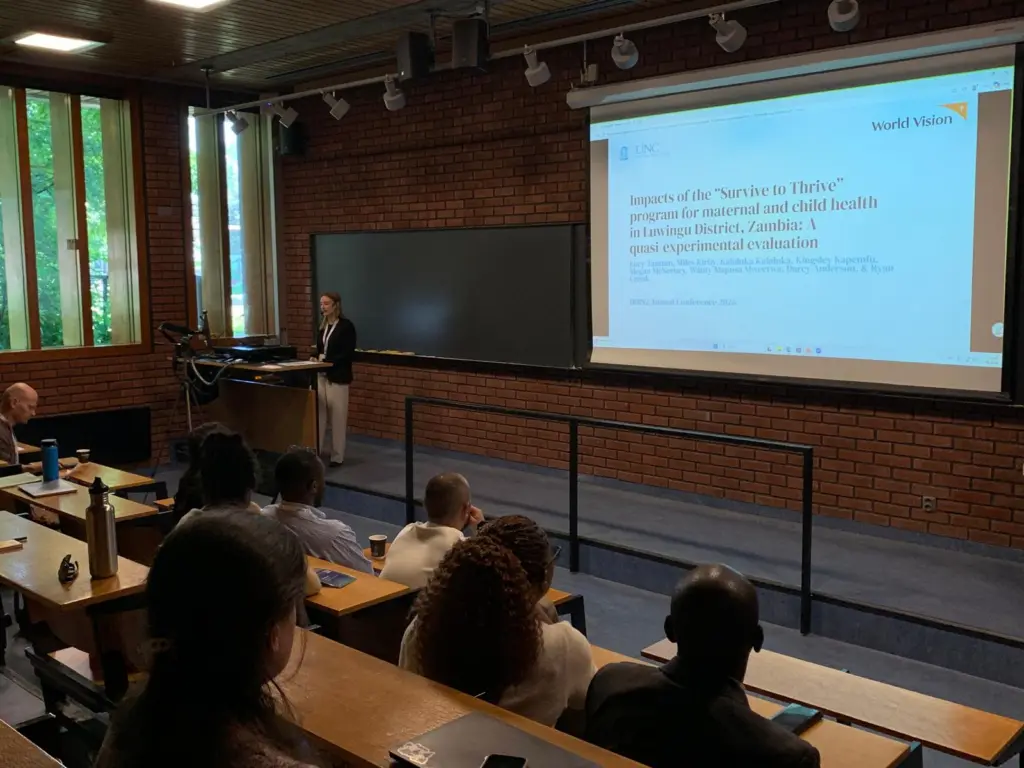
Session: Healthcare impact of the Survive to Thrive program
This session presents research on World Vision’s water, sanitation, and hygiene (WASH) work in healthcare facilities in Zambia, examining the healthcare impact of the Survive to Thrive program.
Every mother and child deserves the chance to survive — and thrive. In Luwingu District, Zambia, World Vision’s Survive to Thrive program worked to make that a reality through stronger health facilities, community engagement, and frontline worker support. By combining infrastructure improvements with community-led initiatives, the program created more supportive environments for women and families.
An evaluation of the program found a significant result: more women returned for follow-up antenatal care, strengthening continuity of care during pregnancy. This may reflect growing trust in health services and stronger connections between communities and health facilities. While changes in some child health outcomes were less clear, the findings highlight how complex — and important — long-term health system strengthening is.
Local groups such as Safe Motherhood Action Groups are playing a vital role in encouraging care-seeking and supporting women throughout their care journeys. The results reinforce what the evidence increasingly shows: when communities and health systems work together, impact follows.
About the presenter
Lucy Tantum recently completed her PhD in Environmental Sciences and Engineering at the University of North Carolina at Chapel Hill, where her research focused on evaluating the impacts of WASH programs in healthcare facilities using survey-based approaches and secondary data sources. She also led a WASH in healthcare facilities evidence mapping and systematic review project. Prior to her doctoral work, Lucy received a Bachelor’s degree in Anthropology from Dartmouth College and conducted global health research in Liberia with the National Public Health Institute of Liberia and Stanford University. She was a National Science Foundation Graduate Research Fellow during her PhD.
